
Toddler bed safety and mattress fit: what to check before you buy
Practical checks for choosing a toddler bed, covering safety hazards such as entrapment, guard rails and small parts, plus how to confirm the correct mattress size and avoid dangerous gaps.
A toddler bed is a common next step after a crib, and if you’re shopping now you probably want clear answers about safety, mattress fit, and what to check before you move your child. This guide explains what a U.S. regulatory summary calls a “toddler bed,” the safety hazards the summary highlights, and what it says about mattress compatibility so you can inspect options with confidence.

What the U.S. CPSC calls a “toddler bed” (and why that matters)
The regulatory-summary language used in the available materials defines a toddler bed as a product designed to accept a full-size crib mattress, providing free access and egress for a child who meets certain age and weight considerations. That framing matters because it establishes the intended mattress size and that the bed is meant to be easy for a young child to get in and out of independently; those design goals influence guard-rail height, mattress placement and openings that regulators pay attention to.
Safety features to check when shopping for a toddler bed
The summary of the federal standard focuses on a set of hazard areas manufacturers must address. When you evaluate a toddler bed in person or from product photos, inspect these elements:
- Openings and entrapment risk — look for places where a child’s head, neck, or limbs could become caught.
- Mattress-support system — ensure there’s a secure, stable platform that doesn’t allow sudden collapse or gaps around the mattress.
- Guard rails and egress — confirm any guard rails are designed for the intended age and that the child can enter and leave the bed safely.
- Sharp points, edges and corner posts — check for exposed hardware, unfinished wood, or decorative posts that could snag clothing or harm skin.
- Small parts and loose components — verify that bolts, knobs and decorative pieces are secured so a child cannot remove them easily.
These are the hazard types named in the standard summary; use them as a checklist when you examine photos, specifications or the assembled bed. The summary does not substitute for an individual product’s labeling or the full regulatory text, so treat it as a safety-focused framework rather than a complete specification sheet.

What the standard summary says about mattress compatibility
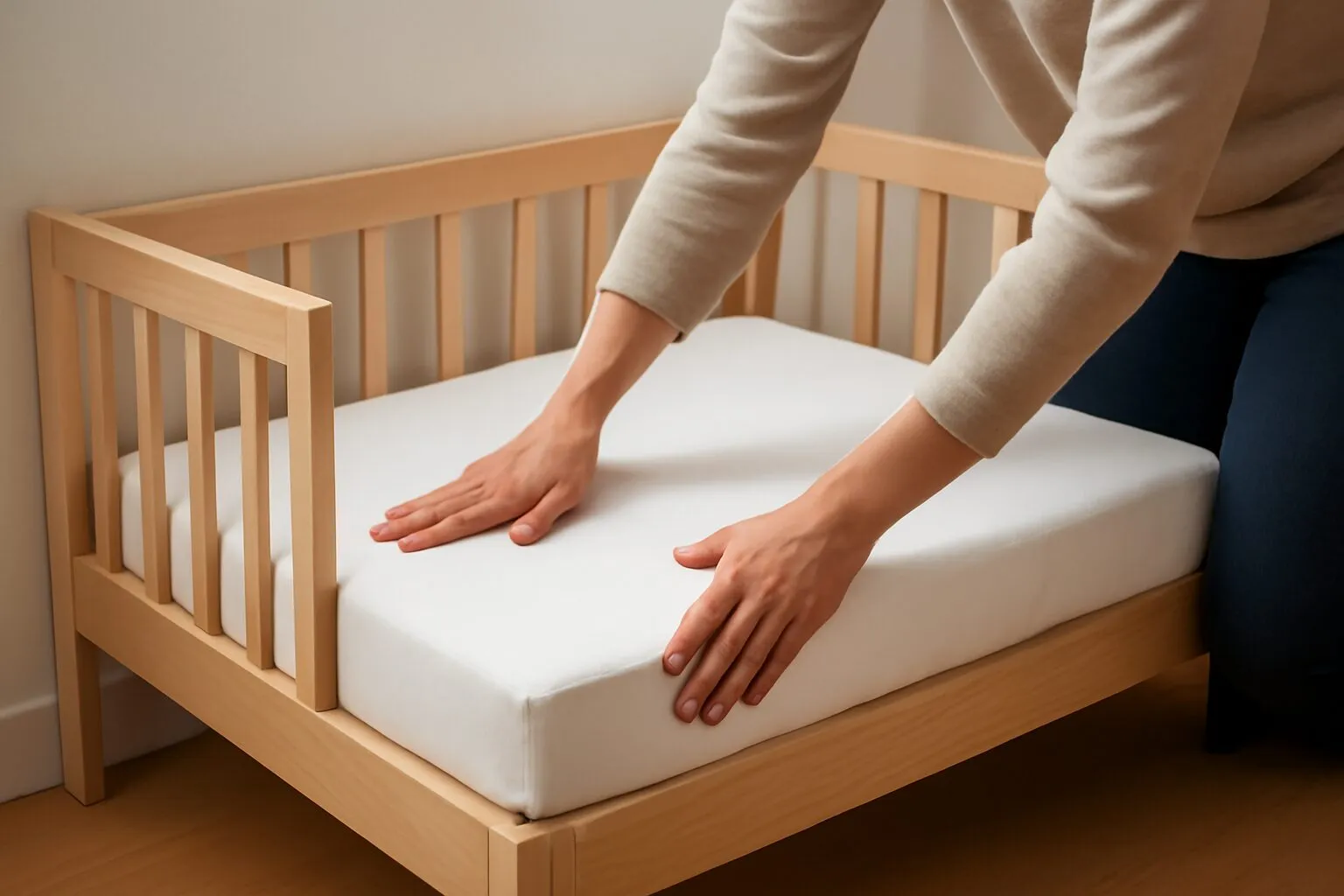
According to the available regulatory-summary material, a toddler bed is intended to accommodate a full-size crib mattress. That statement signals two practical checks for shoppers: confirm the mattress dimensions the bed is designed for, and verify the mattress fits snugly so there are no hazardous gaps. The summary links the product definition directly to mattress fit and to providing unobstructed access for a child of the covered age and weight range.
Because the evidence here is a secondary summary rather than the primary regulatory text, it is important to confirm mattress-sizing claims on the product page or with the manufacturer before you buy. The summary does not provide mattress-thickness limits or firm dimensional tolerances; those specifics should come from the bed’s manufacturer or the mattress vendor.
Quick safety checklist before you buy or install a toddler bed
- Confirm the bed is described as a toddler bed and check which mattress size the manufacturer specifies.
- Examine photos and specs for guard-rail design, mattress platform safety and any noted product warnings.
- Look for secure assembly hardware and finish quality—no sharp edges, loose small parts, or protruding corner posts.
- Measure the mattress you plan to use and compare it to the bed manufacturer’s guidance to avoid gaps around the mattress.
- Keep caregiving practices in mind: supervision and room-level safety (cords, heaters, windows) remain important after the switch.
Conclusion
The available federal-standard summary frames a toddler bed as a purpose-built product that accepts a full-size crib mattress and addresses a set of specific hazards, including openings, mattress supports, guard rails and small parts. Use the hazard list and mattress-compatibility note as a practical shopping checklist, but confirm dimensions and manufacturer guidance on every product you consider. Where the summary leaves gaps—such as exact mattress thickness limits or the full regulatory language—ask the seller or consult authoritative regulatory texts before you finalize a purchase.