Diaper Bag Backpack That Fits How You Move
Practical guidance to pick and use a backpack-style diaper bag: which strap and back-panel features to prioritize, how empty weight affects comfort, and simple carrying adjustments that help on everyday trips with a child.
Decide whether a backpack-style diaper bag fits how you move with a child and what you need to carry. A diaper bag backpack frees both hands, makes transfers between stroller and arms easier, and keeps essentials organized. Use the sections below to choose the features that affect comfort and practicality, check realistic weight expectations, follow simple carrying adjustments, and confirm basic safety limits.
Decide if a backpack suits your outings
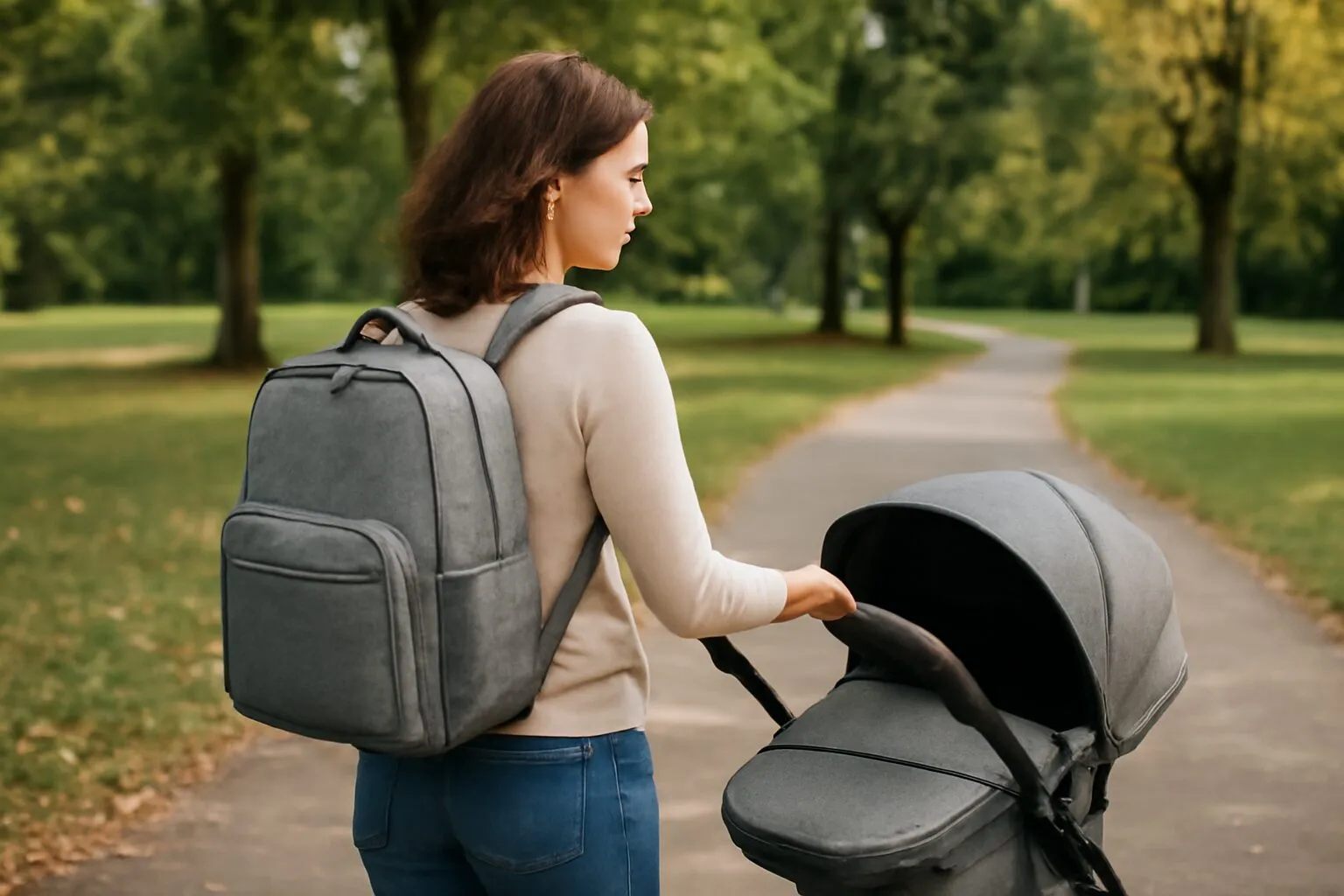
If you want hands-free movement and easier handling of a baby or toddler, choose a backpack. Many parents prefer this style because it balances the load and leaves both hands available. When comparing models, pay particular attention to strap quality and the bag’s empty weight—both change how a loaded backpack feels. You do not strictly need a dedicated diaper bag to go out, but having a stocked backpack ready makes changes and feeding on the go simpler.
Choose straps, the back panel and attachments
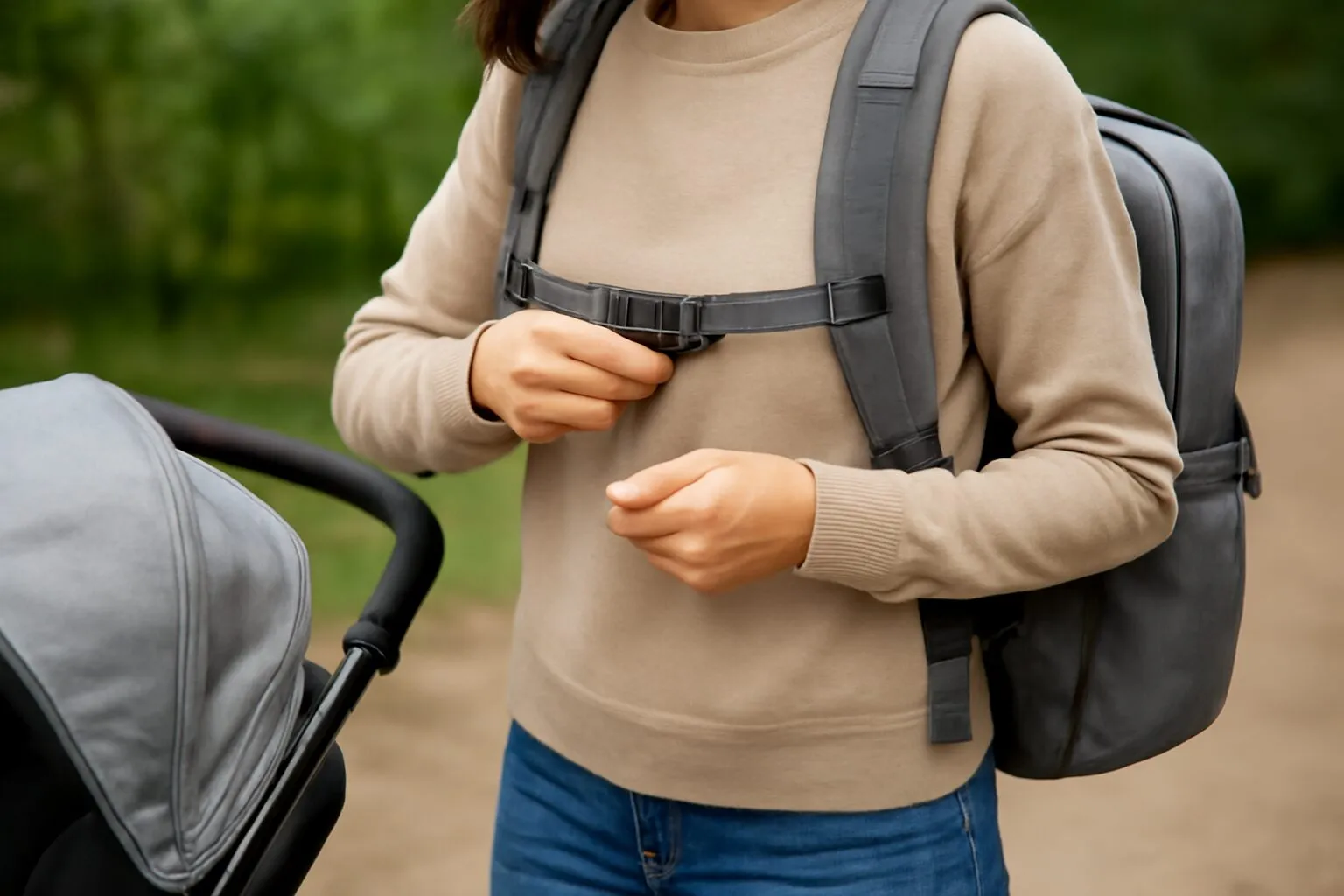
Look for wide, padded shoulder straps that sit comfortably and a padded back panel that cushions the load. A chest (sternum) strap keeps the shoulder straps from slipping and helps distribute weight across the upper body. If you use a stroller, check for stroller clips or a stroller-ride option so you can hang the bag on the stroller instead of carrying it for parts of an outing.
Check empty weight and what to expect
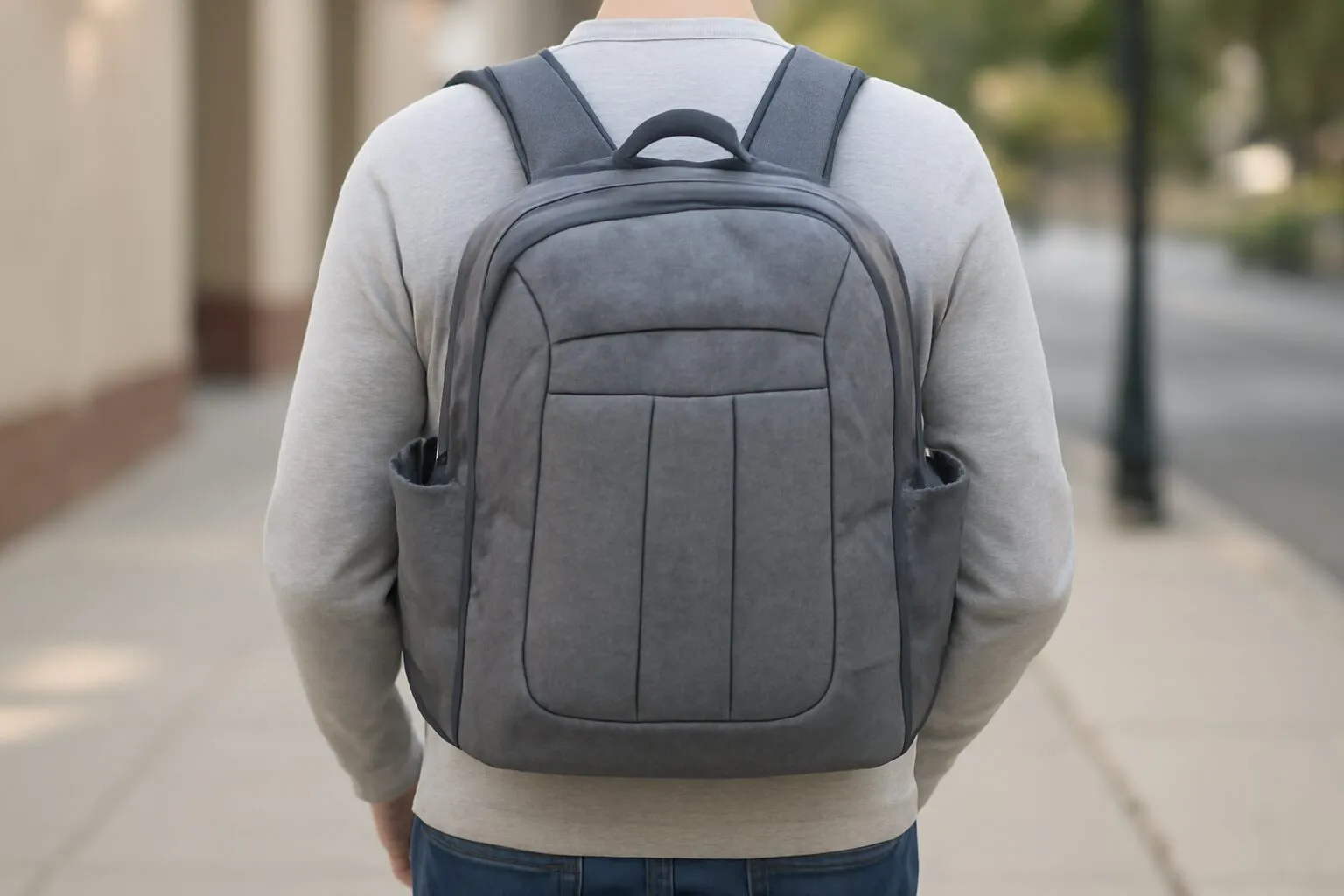
Review the product specifications for the bag’s empty weight. Many diaper backpacks list empty weights in the low-to-mid pound range. A lighter empty bag reduces the baseline weight before you add diapers, milk, clothes and other essentials, so it’s a practical comparison point when choosing between models.
How to carry and adjust the bag for better comfort
Small adjustments change how comfortable a backpack feels. Wear both shoulder straps rather than slinging the bag over one shoulder to keep the load balanced. Tighten the shoulder straps so the bag sits close to your back; this reduces strap pull. Fasten the chest strap if the bag has one to stabilize the shoulder straps and improve weight distribution. When you’ll be standing or moving slowly for extended periods, offload the bag to your stroller using clips or a hook.
Quick buying checklist
- Check strap design: wide, padded shoulder straps and preferably a chest strap.
- Inspect the back panel: padding and breathable construction add comfort for longer carries.
- Note the bag’s empty weight from the product spec; lighter is easier to start with (many list low-to-mid pounds).
- Look for stroller clips or a way to attach the bag to a stroller for parts of outings.
- Consider pocket layout and insulated bottle pockets if feeding on the go is a priority.
Safety reminder
A diaper bag backpack is a convenience tool and does not replace attentive caregiving. A stocked bag makes outings smoother, but always supervise your child directly. Do not assume any consumer monitor or accessory substitutes for in-person supervision or established safe-sleep practices.
Next steps
When you shop, prioritize strap comfort and a supportive back panel, check for stroller attachments and note the bag’s empty weight. Use simple carrying adjustments—wear both straps, tighten so the bag sits close, and use a chest strap—to improve comfort. A well-chosen, properly packed backpack makes outings easier, but it should support care, not replace it.