Practical guide to baby shower thank you notes: timing, tone and tracking
A parent-friendly how-to with plug-in thank-you lines, a short printing and ordering checklist, and clear timing, tone and tracking advice to help busy parents finish notes efficiently and keep an accurate gift log.
Start here: what you can decide right away
Decide how personal you want your notes to be and how quickly you want them to go out. If you want a keepsake for guests, choose folded or photo cards; if speed and postage are priorities, choose postcards or e-cards. Set a daily writing goal—five to ten cards per night will finish a typical list in a week—and keep a gift log during the shower so names and presents stay matched.
When to send baby shower thank-you cards (timeline & etiquette)
Choose a timeline based on how close the shower is to your due date: send notes two to three weeks after showers held well before your due date; allow four to six weeks if the shower is near your due date or after the baby arrives. If you miss that window, send the notes anyway—a brief apology for delay is fine. Practical steps to avoid delay: buy cards or upload a photo-card proof before the shower, keep a running gift list during the event, and set a small nightly writing target until the list is done.
How to write each note: the simple structure
Decide the tone (warm and informal for friends, slightly reserved for coworkers or distant relatives) and stick to three to five sentences for most recipients. Use a four-part structure for every card: greeting, name the gift, one specific sentence about it, warm closing. For quick reference, the parts are:
- Greeting: Use the name your guest prefers (“Dear Maria,” “Hi Uncle Joe”).
- Name the gift: Be specific. Don’t write “thanks for the gift”—write “thank you for the stroller” or “thank you for the adorable onesies.”
- One specific line: Say how you’ll use it, where it will go, or why it mattered.
- Warm closing: Sign your name (add the baby’s name if born) and a short final sentiment.
Tone rules: be genuine, keep late-note apologies brief, and use light humor only with friends who appreciate it.

Ready-to-copy wording examples
Use these short examples and swap in names and the specific gift where prompted.
For hosts and co-hosts
- Dear [Name], thank you so much for hosting such a beautiful shower. The decorations and food made the day feel special—I’m so grateful for the time you put into it.
- Hi [Name], your organization made everything effortless. Thank you for coordinating the games and the lovely centerpieces; I felt truly celebrated.
For guests who brought a gift
- Dear [Name], thank you for the diaper bag. It’s so well organized and will be our go-to for every outing—what a practical and lovely gift.
- Dear [Name], those tiny pajamas are adorable. I can’t wait to dress [Baby name] in them—thank you for thinking of us.
- Dear [Name], the board book set is perfect for starting Baby’s library. We read one last night and already enjoyed it—thank you.
For guests who attended without a gift
- Dear [Name], having you at the shower meant so much. Your stories and company were the best part of the day—thank you for coming.
- Hi [Name], thank you for taking the time to celebrate with me. Your presence was a real gift.
Out-of-town guests
- Dear [Name], it meant the world that you traveled to be with us. Thank you for the beautiful blanket—we’ll treasure it (and you) for years to come.
Coworkers
- Dear [Name], thank you for celebrating with us and for the generous gift card. I appreciate the support and can’t wait to show you photos when the baby arrives.
Group gifts
- Dear [Names or Team], thank you so much for contributing to the stroller fund. This gift checked off an item we needed most—your generosity means a great deal to our family.
Belated or lost-gift situations
- Dear [Name], thank you for the lovely gift and forgive the delayed thanks—newborn life has been wonderfully chaotic. Your thoughtfulness brightened our early days.
Design and format: choose by budget and timeline
Decide whether you want keepsakes, speed, or low postage costs. Folded cards feel traditional and private and leave room for longer messages; postcards are faster and cheaper to mail but offer less space and privacy; photo cards are personal keepsakes but may add turnaround time for proofs and printing; e-cards are instant and eco-friendly but can feel less tactile.
Quick rules of thumb: pick postcards when postage or speed is the priority; pick folded or photo cards when you want a keepsake; use e-cards for last-minute thank-yous or for friends who prefer digital contact.
How to order and print: steps and a tracking checklist
Before you order, decide quantity, check proofs, and plan postage. Follow these steps:
- Decide on quantity: order a few extra (5–10%) to cover mistakes and late guests.
- Request a proof: always approve a physical or digital proof before full printing to check spelling, alignment and photo cropping.
- Include essentials: consider printing the return address on envelopes to save time; choose an envelope color that matches your design; check postage sizing for heavy cards or square envelopes.
- Buy stamps in advance to avoid extra trips; specialty stamps add a personal touch.
Simple tracking method for gifts and thank-yous:
- Create a spreadsheet with columns: Guest Name, Gift, Gift Date, Registry (yes/no), Sent (Y/N), Date Sent, Notes. Update it during the shower as gifts are opened or as mailed gifts arrive.
- For group gifts, list each contributor’s name. Either send individual notes to each person or a single group message if the contribution came from a team with many people.
If you print at home, confirm your printer margins and paper weight. For professional printers, request a thick card stock sample to ensure the feel matches your expectations.
Finishing touches and personalization
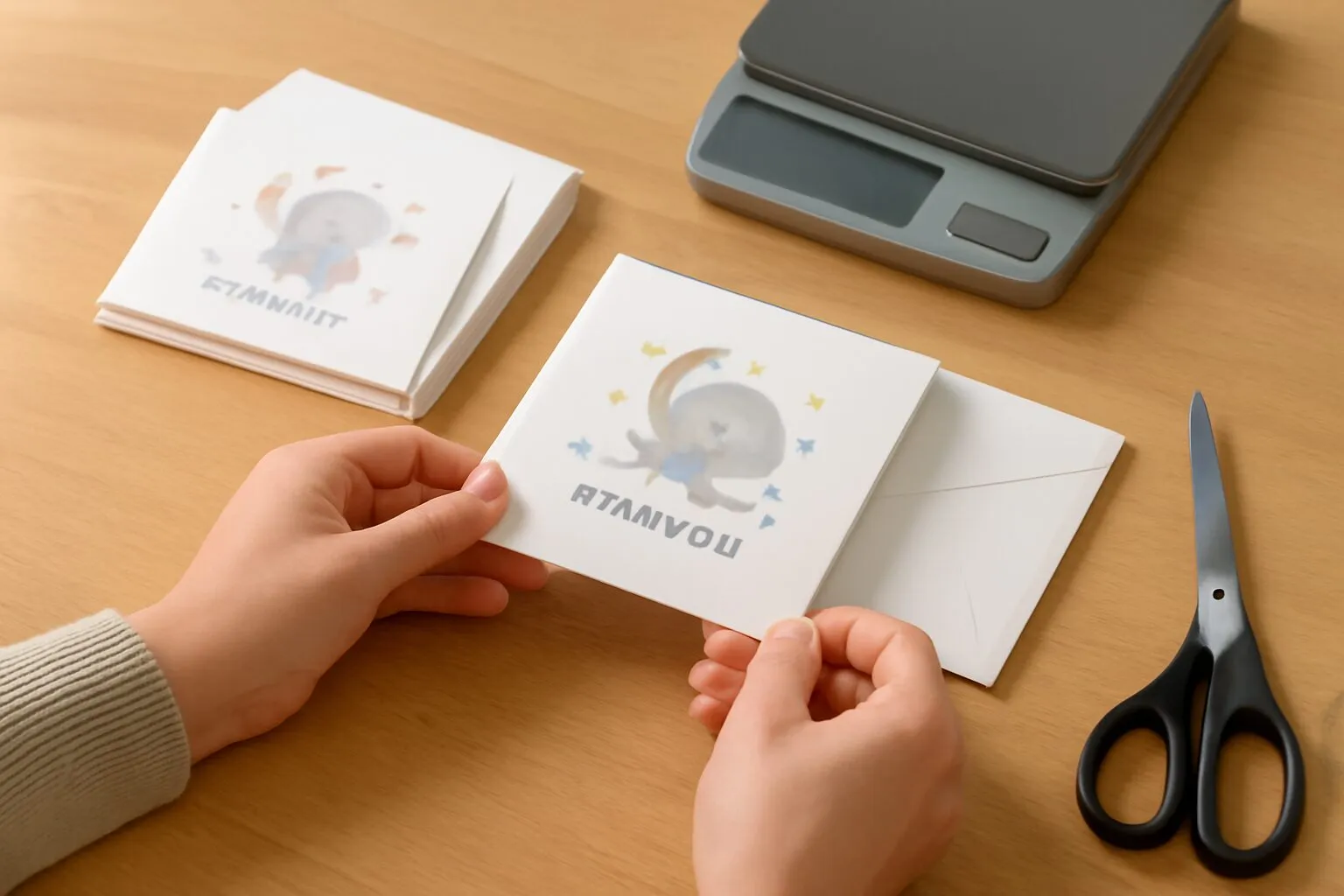
Decide how personal you want each note: handwriting adds warmth, a small photo or sticker makes the card special, and a brief practice line on scrap paper prevents smudges or cross-outs. When handwriting many cards, write a template line to copy so your tone and phrasing stay consistent.
Common questions
Who should get a thank-you card?
Everyone who attended or sent a gift. If many coworkers chipped in, acknowledging the group with a posted note or a single shared message is acceptable when the contribution came from a team.
What if I forgot who gave something?
Check your gift log first. If you still can’t match a gift to a giver, send a general thank-you message to attendees (for example, an email with a group photo) and follow up individually when you can confirm details.
Final thoughts
Thank-you cards are a small effort with big meaning. Use the four-part structure—greeting, name the gift, one specific line, warm closing—pick the format that fits your timeline and budget, track gifts as they come in, and send the notes even if they’re a little late. Your guests will appreciate the gesture, and you’ll finish this part of the celebration with a tidy list and a grateful heart.