
Nursery closet organization: create a daily-access zone and seasonal storage
Practical steps to set up and maintain a nursery closet so daily care is faster. Covers measuring, creating an easy-access zone with bins and extra rods, seasonal rotation and a short maintenance checklist.
Start by deciding what you need this closet to do
Make the closet reduce friction in everyday care. Your goals should be immediate reachability for outfits and diapering, contained storage for small items, and a place to park seasonal or outgrown gear so it doesn’t creep into daily space. With those priorities in mind you’ll plan differently for a tiny reach-in than for a walk-in: measure first, then adapt vertical space and containment to match how you actually use the nursery.
Decide what kind of closet you have and measure it
Open the door and identify the type—reach-in/shallow, narrow, or walk-in—and measure height, width and depth. Those dimensions tell you how much vertical stacking and how many hanging levels you can add. Infant clothes take up far less vertical space than adult garments, so extra hanging rods or added shelves will quickly multiply usable storage. Note which parts of the closet are already fixed (a high wire shelf, a single rod) so you can decide whether to retrofit or replace those elements.
Create a daily-access zone: put what you use every day within easy reach
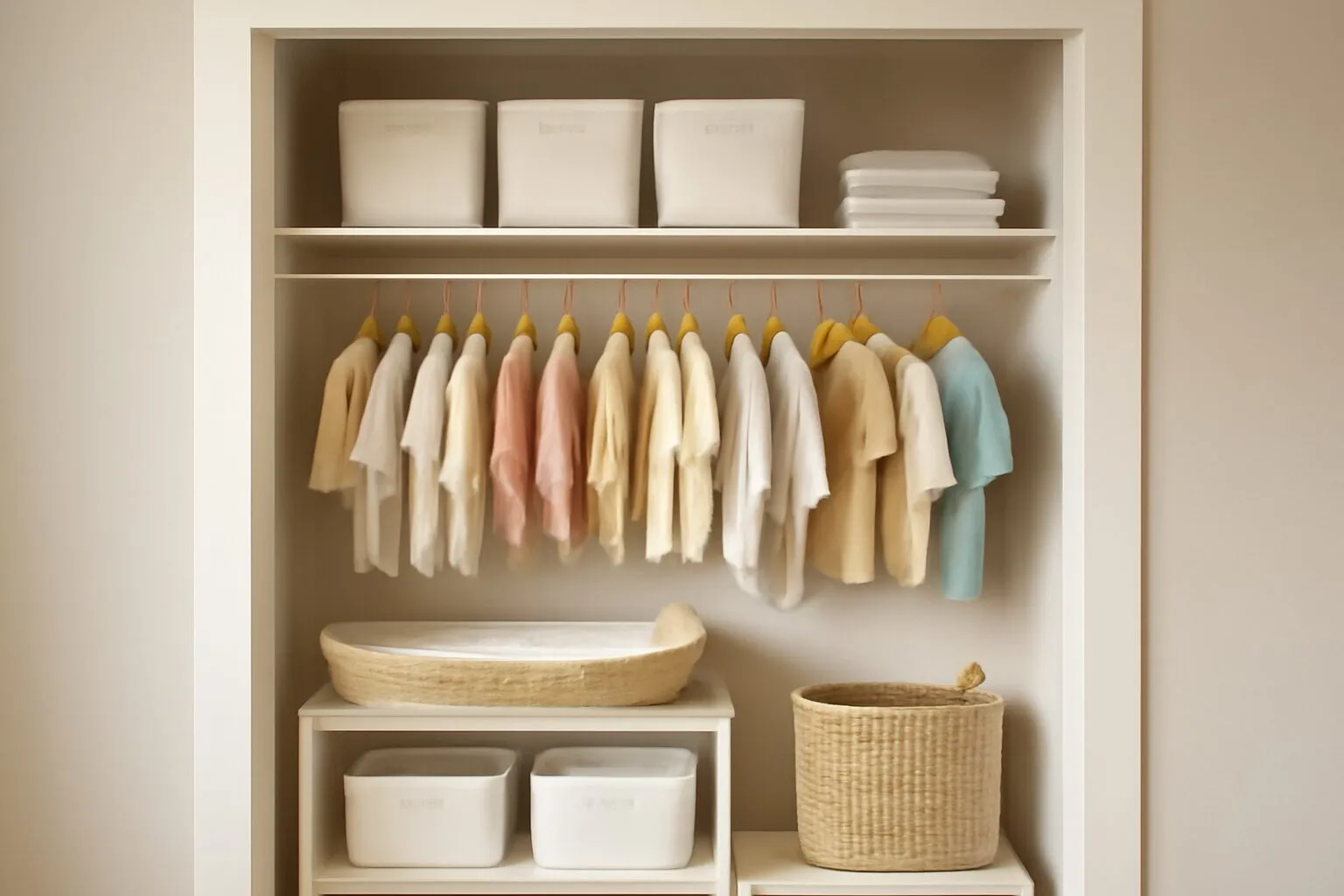
Decide where the caregiver naturally works—roughly eye to waist height—and make that your daily-access zone. Store outfits, diapers, wipes and a spare change of clothes there so you don’t have to search or bend repeatedly. A small dresser or a changing table with drawers positioned inside or next to the closet speeds grab-and-go tasks; open shelves with labeled bins or baskets keep socks, hats and bibs organized and visible. Contain small items in individual bins so they don’t turn into a jumbled mess, and keep diapering supplies together so you can grab a full kit in one motion.
Plan seasonal and overflow storage: rotate and label
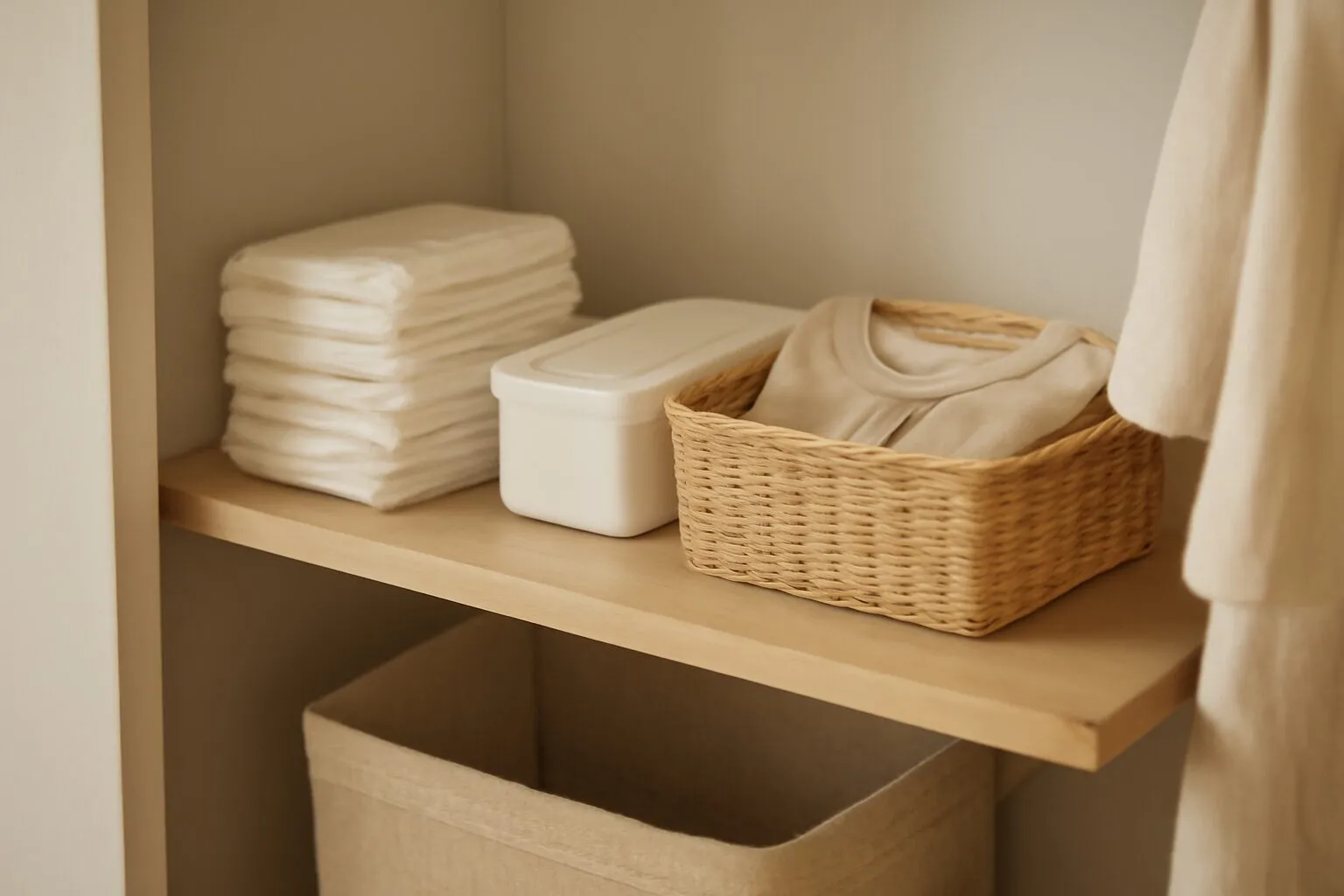
Decide which shelves will be for frequent use and which for overflow. Reserve upper shelves and the floor for less-used or seasonal items. Use clear or labeled bins so you can identify contents at a glance; keep an empty bin dedicated to outgrown clothing and drop items there as they no longer fit, preventing them from migrating back into daily space. Store heavy or seldom-used items low on the floor to avoid instability when reaching. Rotate boxes seasonally: move out-of-season clothing higher or to another storage area so the daily-access zone only contains what you currently need.
Small-closet hacks and budget DIY options you can do this weekend
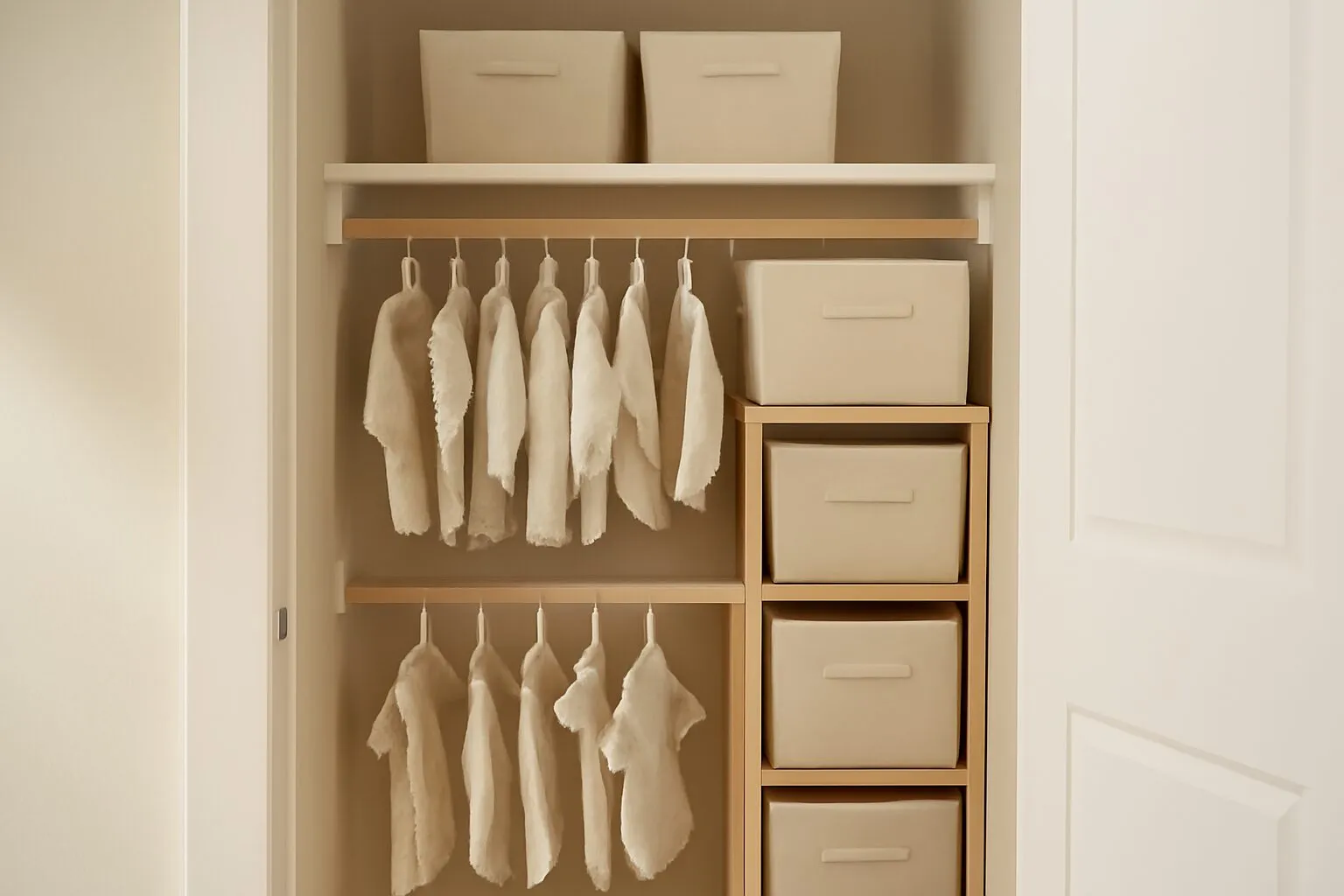
If your closet is tight, increase vertical density: add a second or third hanging rod where clearance allows, install extra shallow shelves, or replace a single high wire shelf with built shelving for cleaner layers. Simple DIY shelving from plywood or prefabricated units converts wasted vertical space into stackable surfaces. For low-cost, no-tools options, use stackable fabric bins and over-the-door organizers to create pockets for shoes, small toys, burp cloths or spare nappies without a major build. Swap one long rod for two staggered rods to double hanging capacity for tiny outfits.
Safety, babyproofing and what to check regularly
Keep safety central as you organize. Anchor any dressers, shelving or tall furniture used near the closet to the wall according to manufacturer instructions and local guidance. Store heavy items and bulky gear on lower shelves or the floor to prevent tipping when someone reaches up. Keep small loose items and anything with detachable parts out of reach to reduce choking hazards. Check that shelf brackets and bins are secure and that nothing can fall into the changing area.
Maintenance checklist (brief)
- Weekly: replenish diapers and wipes in the daily-access bin.
- Monthly: tidy baskets, re-label if needed, and check for loose small parts or broken fasteners.
- Seasonal: rotate clothing bins, move out-of-season items to higher shelves or separate storage, and empty the outgrown-clothes bin for donation or storage.
Put the plan into one action
Measure the closet, pick a mid-level daily-access zone, add containment (bins, baskets, drawers) for small items, and move seasonal or outgrown items to higher or separate storage. Use extra rods or shelves to make more of the vertical space, anchor furniture, and keep a short maintenance rhythm—weekly, monthly and seasonal checks—to preserve order and safety. These steps will make the closet a reliable part of your routine rather than another thing to manage.