
Toddler bed safety and mattress fit: what to check before you buy
Practical checks for choosing a toddler bed, covering safety hazards such as entrapment, guard rails and small parts, plus how to confirm the correct mattress size and avoid dangerous gaps.
A toddler bed is a common next step after a crib, and if you’re shopping now you probably want clear answers about safety, mattress fit, and what to check before you move your child. This guide explains what a U.S. regulatory summary calls a “toddler bed,” the safety hazards the summary highlights, and what it says about mattress compatibility so you can inspect options with confidence.

What the U.S. CPSC calls a “toddler bed” (and why that matters)
The regulatory-summary language used in the available materials defines a toddler bed as a product designed to accept a full-size crib mattress, providing free access and egress for a child who meets certain age and weight considerations. That framing matters because it establishes the intended mattress size and that the bed is meant to be easy for a young child to get in and out of independently; those design goals influence guard-rail height, mattress placement and openings that regulators pay attention to.
Choosing bed size by age and growth
When deciding between a toddler-sized frame and a longer twin-style bed, weigh the child’s current size and how quickly they’re growing alongside practical factors like bedroom space and how the child moves in and out of bed. Consider whether the child can safely and comfortably enter and exit the bed on their own and whether you want the bed to serve for just a short time or for several years.
- Decision factors to consider: the child’s height and weight trajectory, likelihood of climbing or needing easier egress, available floor space, and whether you want a bed that will be reused later by another child.
- Typical guidance is conditional: for many younger toddlers a bed sized to accept a crib mattress can be appropriate; consider a longer bed once the child reliably outgrows the mattress or when you need extra length for longer-term use.
- Questions to ask yourself when choosing: Does the child climb out of their current sleep surface? Do you prefer a short-term transition or a longer-lasting bed? Is room size or furniture layout a limiting factor?
Because the article summarizes regulatory framing rather than providing product-specific dimensions, always confirm the manufacturer’s mattress-size guidance and any labeling before you buy.
Types of bed frames and materials
- Common frame types: solid wood frames (durable appearance but heavier), engineered wood/MDF (often more affordable with varied finishes), metal frames (typically lighter and easy to move), plastic components (lightweight and washable), and convertible or travel-friendly designs that fold or disassemble for transport.
- Pros and trade-offs: wood tends to offer a classic look and perceived sturdiness at the cost of weight; metal can be lighter and simpler but may creak or show wear differently; convertible designs add flexibility for changing needs.
- Finish and VOC considerations: look for low-VOC paints or finishes and check the manufacturer’s safety information or labeling about coatings rather than assuming any finish is low-emission.
- Room-fit notes: low-profile or compact frames and travel-friendly designs can be better suited to small rooms or multi-use spaces; consider how the frame’s footprint and storage features match your room layout.
Safety features to check when shopping for a toddler bed
The summary of the federal standard focuses on a set of hazard areas manufacturers must address. When you evaluate a toddler bed in person or from product photos, inspect these elements:
- Openings and entrapment risk — look for places where a child’s head, neck, or limbs could become caught.
- Mattress-support system — ensure there’s a secure, stable platform that doesn’t allow sudden collapse or gaps around the mattress.
- Guard rails and egress — confirm any guard rails are designed for the intended age and that the child can enter and leave the bed safely.
- Sharp points, edges and corner posts — check for exposed hardware, unfinished wood, or decorative posts that could snag clothing or harm skin.
- Small parts and loose components — verify that bolts, knobs and decorative pieces are secured so a child cannot remove them easily.
These are the hazard types named in the standard summary; use them as a checklist when you examine photos, specifications or the assembled bed. The summary does not substitute for an individual product’s labeling or the full regulatory text, so treat it as a safety-focused framework rather than a complete specification sheet.
Guard-rail types and what to measure
- Common rail types: fixed full-length rails that run along the bed side, partial or half-rails that cover only part of the opening, and removable or attachable rails designed to clip onto a mattress or frame.
- How to measure rail height: measure from the top surface of the mattress to the highest usable point of the rail so you understand the relative barrier; also check how easily the child can get in and out when the mattress is in place.
- Removable vs fixed rails: fixed rails are generally less likely to shift or detach during use, while removable rails can make mattress replacement or moving the bed easier—inspect attachments and locking mechanisms carefully.
- Gaps and spacing: look for any openings between rails, the mattress, and the frame where a child’s head or limbs might become trapped and inspect for small cavities around decorative or structural elements.

What the standard summary says about mattress compatibility
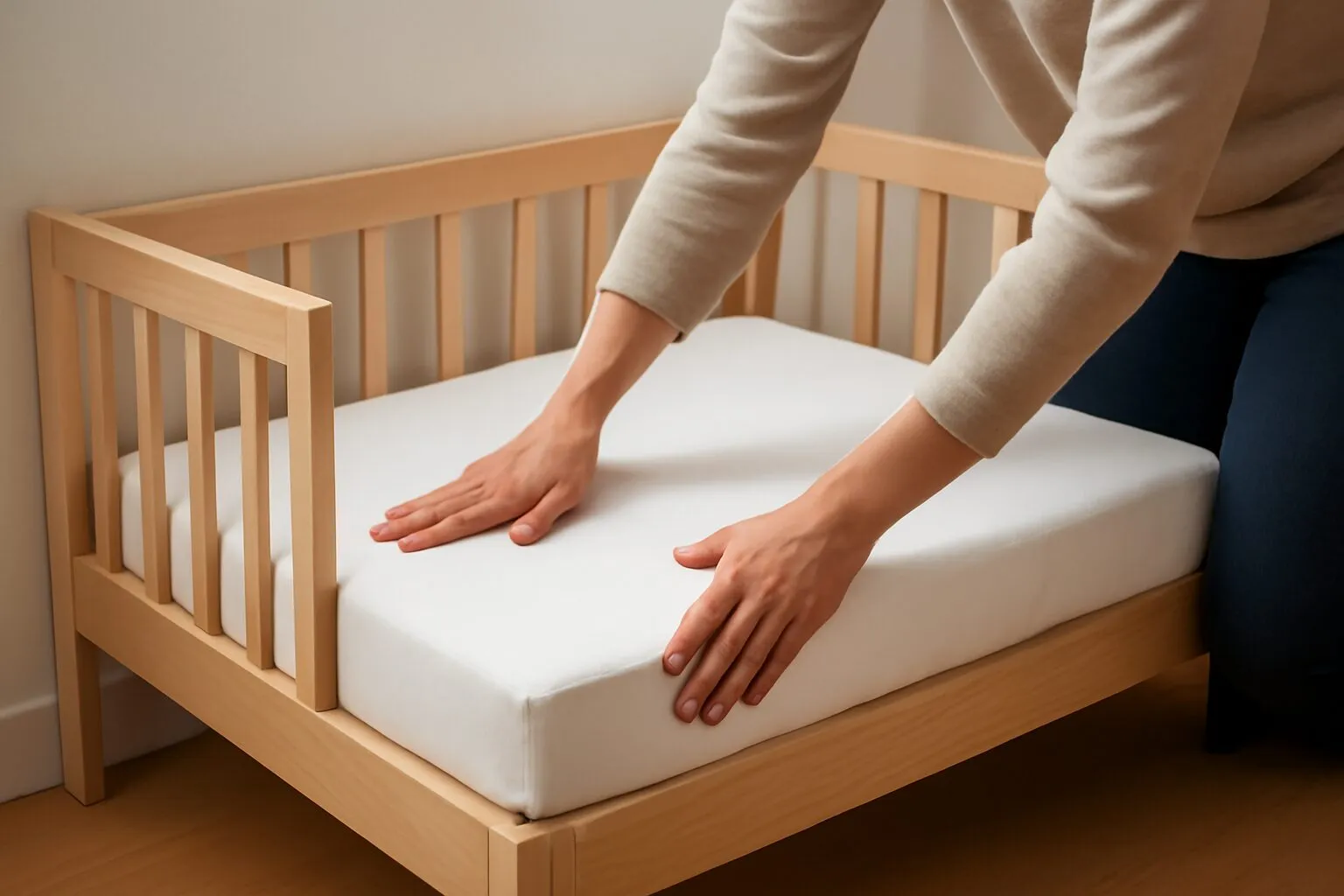
According to the available regulatory-summary material, a toddler bed is intended to accommodate a full-size crib mattress. That statement signals two practical checks for shoppers: confirm the mattress dimensions the bed is designed for, and verify the mattress fits snugly so there are no hazardous gaps. The summary links the product definition directly to mattress fit and to providing unobstructed access for a child of the covered age and weight range.
Because the evidence here is a secondary summary rather than the primary regulatory text, it is important to confirm mattress-sizing claims on the product page or with the manufacturer before you buy. The summary does not provide mattress-thickness limits or firm dimensional tolerances; those specifics should come from the bed’s manufacturer or the mattress vendor.
Quick safety checklist before you buy or install a toddler bed
- Confirm the bed is described as a toddler bed and check which mattress size the manufacturer specifies.
- Examine photos and specs for guard-rail design, mattress platform safety and any noted product warnings.
- Look for secure assembly hardware and finish quality—no sharp edges, loose small parts, or protruding corner posts.
- Measure the mattress you plan to use and compare it to the bed manufacturer’s guidance to avoid gaps around the mattress.
- Keep caregiving practices in mind: supervision and room-level safety (cords, heaters, windows) remain important after the switch.
- Pre-assembly: inventory all parts and fasteners and read the full assembly manual before you begin so you can spot missing pieces early.
- Assembly: hand-start screws and bolts to align parts before final tightening and follow the manufacturer’s recommended tightening sequence and instructions rather than guessing torque levels.
- Installation: position the bed away from cords, window coverings and heat sources and make sure it sits level on the floor to reduce stress on joints and hardware.
- Maintenance and inspection: after initial use, retighten visible fasteners and then check and retighten periodically; routinely inspect for cracks, splinters, loose hardware or worn components and repair or remove damaged parts.
- Cleaning and finishes: use the manufacturer-recommended cleaners and avoid harsh chemicals that could damage finishes or protective coatings.
Conclusion
The available federal-standard summary frames a toddler bed as a purpose-built product that accepts a full-size crib mattress and addresses a set of specific hazards, including openings, mattress supports, guard rails and small parts. Use the hazard list and mattress-compatibility note as a practical shopping checklist, but confirm dimensions and manufacturer guidance on every product you consider. Where the summary leaves gaps—such as exact mattress thickness limits or the full regulatory language—ask the seller or consult authoritative regulatory texts before you finalize a purchase.
Best toddler bed frames by use-case
The following two model picks are examples from a recent editorial roundup and are shown here as illustrative use-case options; confirm current specifications and safety details with the manufacturer or retailer before buying.
- Delta Children Canton Toddler Bed — editorial roundup pick for an everyday toddler bed; verify the model’s current safety features and mattress compatibility with the seller.
- Nestig Off Road Kids Bed — editorial roundup pick for a car-themed toddler bed option; check up-to-date specifications and safety information directly with the manufacturer or retailer.