Terrain and wheel guide for four-seat stroller wagons
A practical comparison and checklist to help families choose a four-seat wagon: verify per-seat limits, harness type, brake and fold behavior, and match wheels and folded size to your routine and storage.
Who this guide is for and what stroller wagon for 4 means
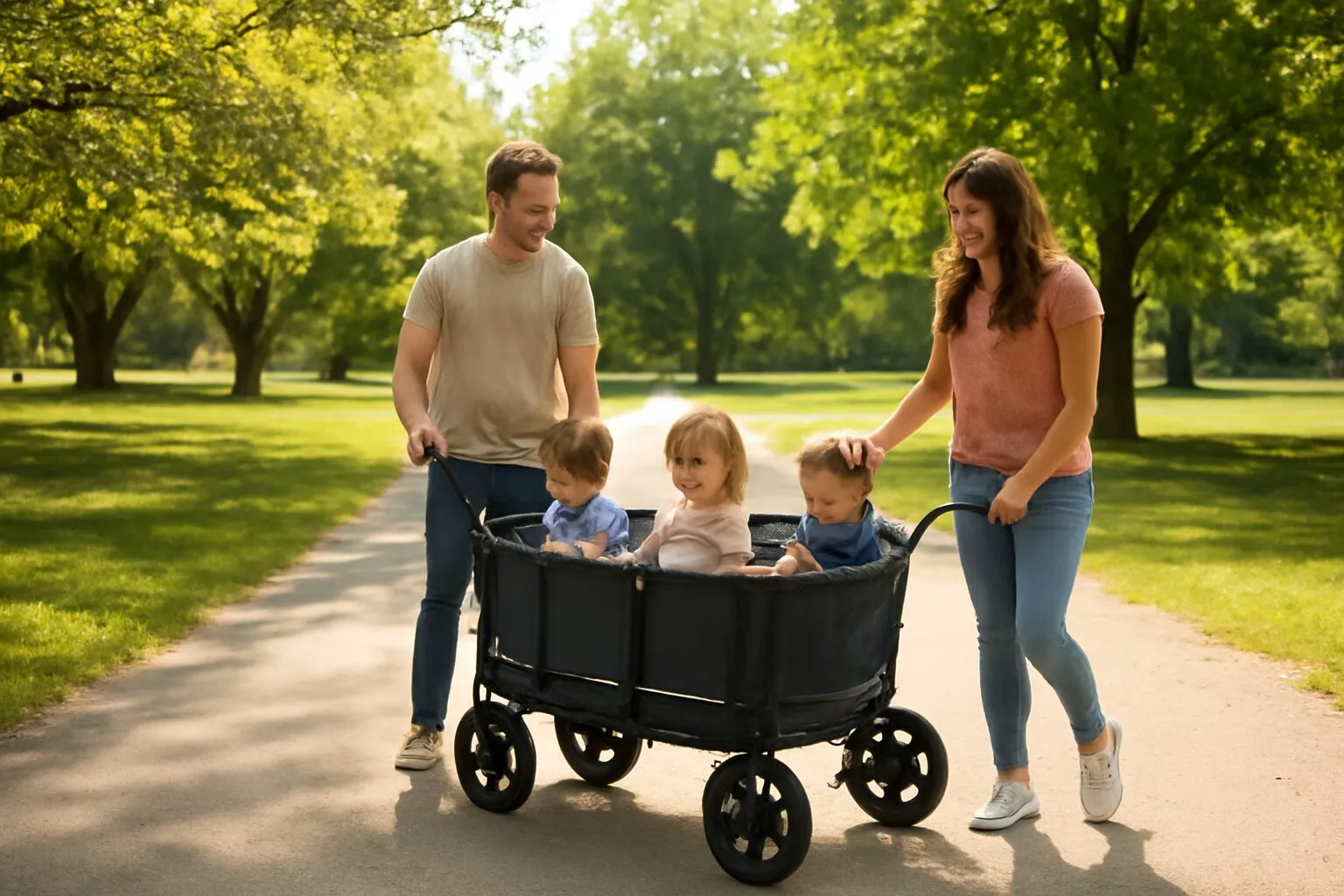
If you’re searching for “stroller wagon for 4”, you mean a wagon-style stroller built to carry four children safely and reliably. This guide helps you narrow choices, run practical safety checks before or after purchase, match wheel and steering systems to your common terrain, and use a short buying checklist so the model you pick fits how your family actually gets out the door.
Which models to consider first and the three numbers to check
Several names come up most often: the Wonderfold W4 line (W4 Elite, W4 Luxe), the newer Anthem4 quad wagon, several Famileasy 4-seat designs, and an emerging Keenz 7S+ quad variant. These models are popular because they pair commercial-style frames with reclining or padded seats and, in many cases, 5‑point harnesses on every seat.
Before you invest time comparing features, confirm three numbers up front: empty weight, total weight capacity, and per-seat weight limit. A low per-seat limit can immediately rule out a wagon if your toddlers or older children are heavier than rated.
Safety essentials: what to verify before buying and right away
Safety should be the primary filter. Use the checklist below when you’re deciding in store or inspecting a delivered wagon, and repeat the same checks after any repair or modification.
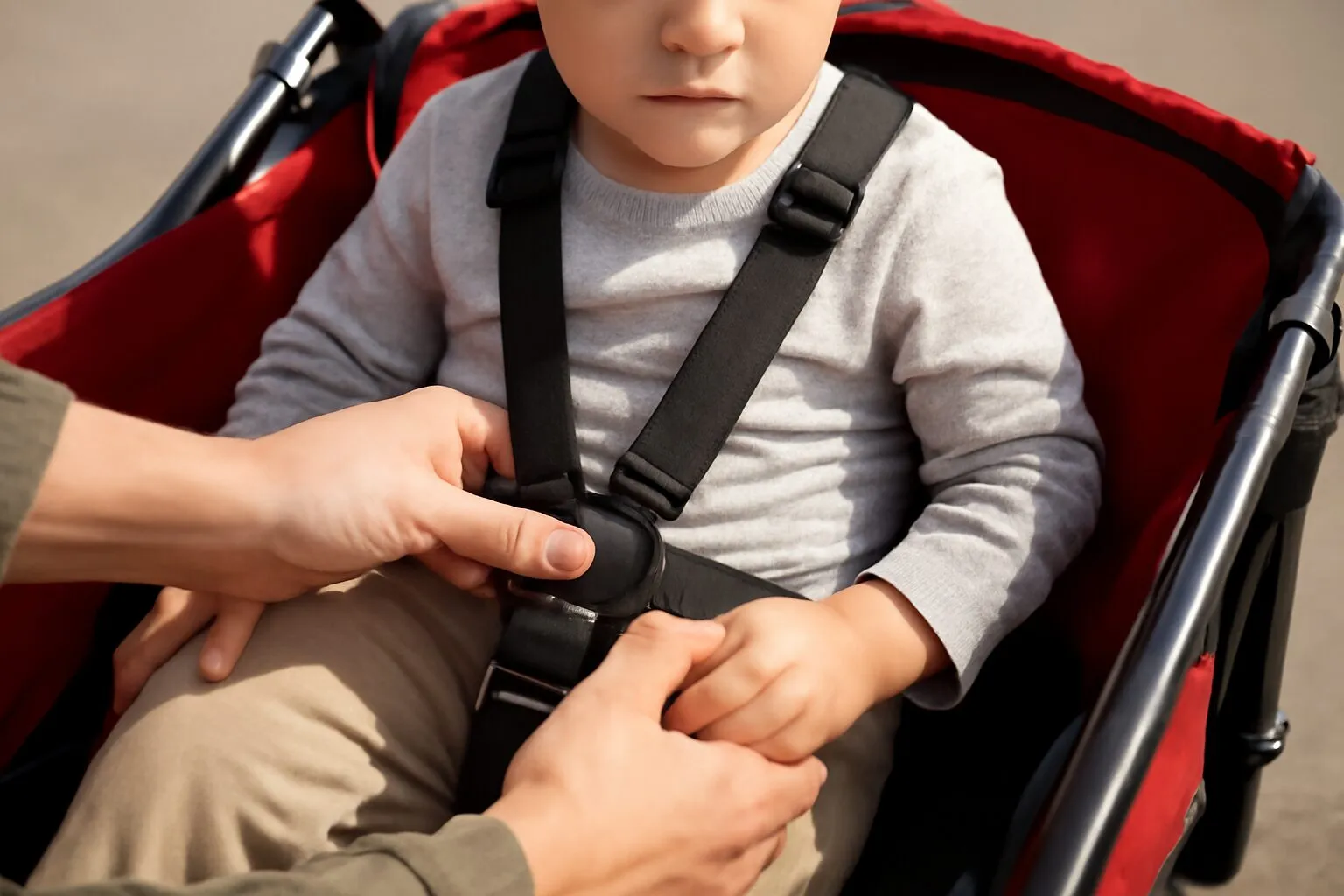
- Harness type and coverage: Every seat should use a true 5‑point harness (shoulder straps, lap belt and crotch strap). Ask for manufacturer-recommended minimum ages and both per-seat and total weight limits. If straps are removable or user-adjustable, confirm they tighten and release reliably.
- Brake operation: Test the brake with the wagon loaded if possible. The brake should lock both rear wheels, hold the wagon on a shallow incline, and release without requiring you to put your foot in a risky position. Note any exposed brake bars that could trip you while walking.
- Seat security and buckles: Buckles should latch securely and require a deliberate two-handed or two-step release so a toddler can’t unbuckle alone. Sit a lightweight child or equivalent weighted bag in each seat and try to tip or shift the center of load to confirm seats stay in place.
- Canopy and sun protection: If you’ll use the wagon for long outdoor days, check for UPF-rated canopies and whether one canopy covers all seats or if dual/adjustable canopies are provided.
- Manufacturer documentation and warranty: Keep the manual or a photo of the label listing age/weight limits and folding instructions. Register the product and file the receipt right away so warranty or returns are easier if the wagon proves impractical.
On-arrival and test-ride checklist
- Operate and release every harness and buckle on every seat.
- Load the wagon (kids or weighted bags) and test brakes, steering, and fold/unfold with the same load you plan to carry.
- Check for loose stitching, missing fasteners, rattles, or parts that flex too much under load.
- Confirm the fold method works while managing children—if folding requires removing seats or two adults, note that as a daily limitation.
Maneuverability and wheels: pick the wheel type for your terrain
Wheel design is the single biggest determinant of day-to-day usability. A wagon that’s perfect on sidewalks can be unusable on grass or sand.
Wheel types and trade-offs
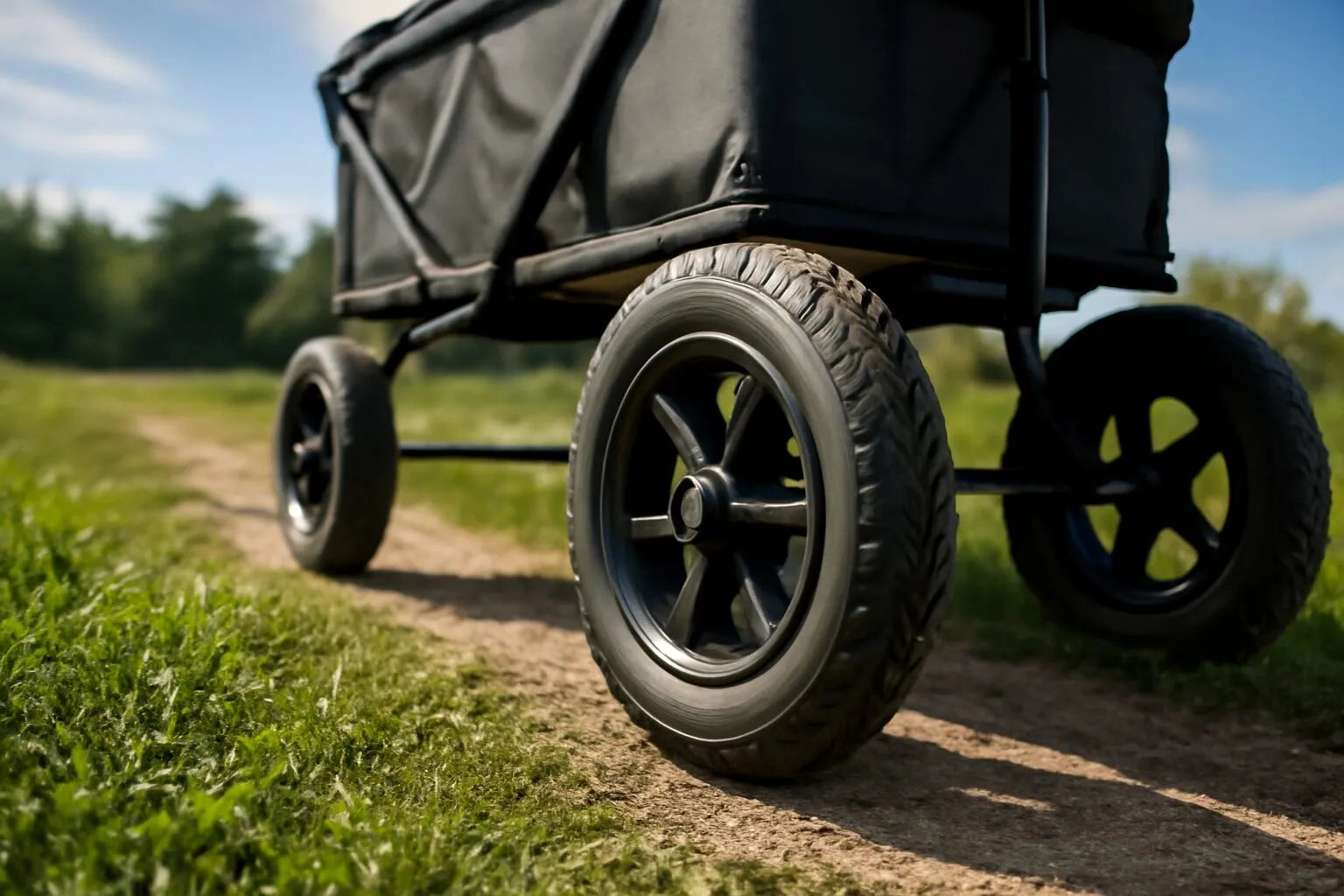
- Large pneumatic or airlike tires (10–14+ in): Best for grass, gravel, beaches and long walks. They smooth bumps and reduce pushing effort. Expect more weight and occasional maintenance for air-filled tires.
- Large solid PU or foam-filled tires: Low maintenance and good for sidewalks, paved parks and flat city use. They’re smoother than tiny wheels but less forgiving than pneumatic tires on soft ground.
- Small caster-style wheels (6–9 in): Lightweight and easy to store, but they struggle on grass, sand and roots—avoid these if you’ll be off pavement often.
Steering, handle design and pushing force
Loaded with four children, wagons get heavy. Look for telescoping or multi-height handles to avoid stooping, wide ergonomic grips for two-handed pushing, and steering geometry that keeps turning effort reasonable—a wider wheelbase and larger front wheels reduce the force needed to start movement. Hand-actuated swivel locks on front wheels are useful when you move between smooth and rough surfaces.
Terrain advice by use
- If your routes are theme parks, malls and paved parks: large PU or foam-filled wheels give a good balance between weight and smooth rolling.
- If you plan beach runs, hiking-adjacent trails or parks with frequent hills: prioritize pneumatic tires and higher pushing leverage; expect a heavier wagon and confirm trunk fit before buying.
- If you often pass through standard doors or tight park gates: measure the wagon’s width against those openings—many 4-seat wagons are too wide for standard commercial gates or narrow entrances.
Practical buying checklist (step-by-step)
- Confirm per-seat and total weight capacity and the manufacturer’s minimum recommended age for each seat.
- Verify harness type—5‑point harnesses are recommended on every seat—and how the buckle releases operate.
- Test the brakes while loaded; confirm both rear wheels are controlled and the brake can be engaged and released safely with normal footwear.
- Measure folded dimensions against your trunk, closet or garage space; test folding with the configuration you’ll actually use.
- Match the wheel system to your regular terrain—large pneumatic or robust foam-filled wheels are worth the extra empty weight for rough ground.
- Check canopy coverage, storage capacity, and available accessories (cup holders, sun shades, rain covers). Those small items matter when you’re managing four children.
- Review return and warranty policies—ensure you can exchange or return the wagon if a full day out shows it’s not a fit.
Which wagon suits different users
- Families with 3–4 small children or multiples: Prioritize recline, strong harnesses, and fast-buckle systems if you load and unload frequently.
- Childcare providers and schools: Choose durability, easy-clean fabrics, and a fold that one adult can operate unaided.
- Active outdoor families: Pick pneumatic large wheels and high weight capacity; accept extra weight for better traversability.
- Urban or transit-using families: Favor narrower models with compact folded size and lower empty weight, even if that reduces off-road capability.
Decide your next step
A four-seat stroller wagon can transform outings, but only when its features match your everyday use: terrain, storage, folding needs and the ages and weights of your children. Test harnesses, brakes and folding using the same load you’ll carry. If you can’t test with children, use equal weights in each seat and run the brake and fold checks listed above. Keep the manufacturer’s age and weight limits and your receipt handy in case you need to return or exchange the wagon.
Quick action plan
- List your regular routes (theme park, city streets, beaches) and measure any door or gate widths you must pass through.
- Use that list to prioritize wheel type and folded width, then compare two models that meet those constraints in person or via detailed video demos.