Family first aid kit: what to pack for home and travel
Practical guidance on assembling family first aid kits for home and travel, storing and checking supplies, safe short-term care for children, and clear signs that require medical attention.
Decide what level of preparedness fits your family: a full home kit plus a compact travel or vehicle kit will let you treat most minor injuries immediately and stabilize a child while you seek professional help when needed. This guide explains what to pack for both kits (including newborn and toddler adjustments), how to store and inspect supplies, what parents can safely do at home, and when to call medical services.
Choose both a home kit and a travel/vehicle kit
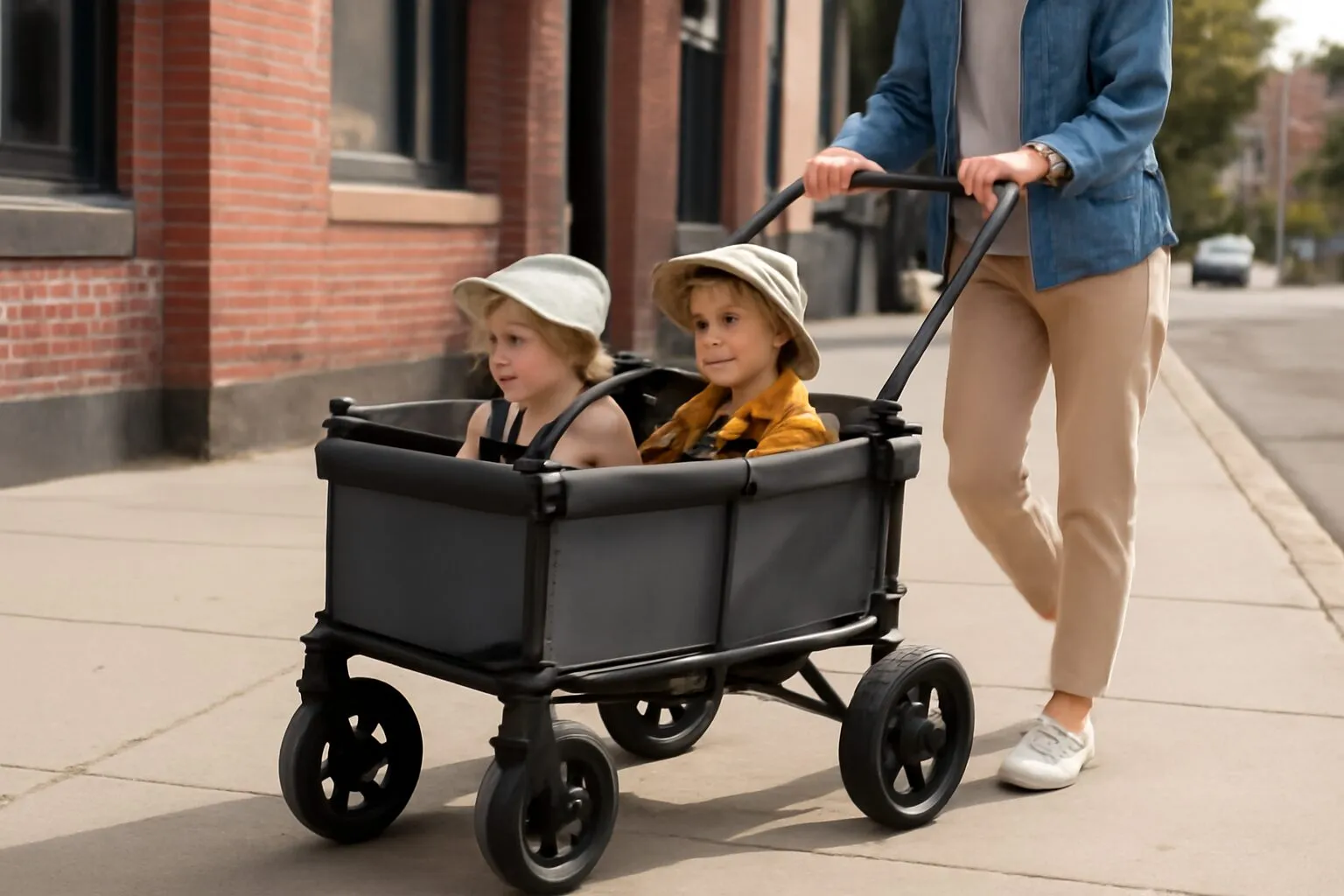
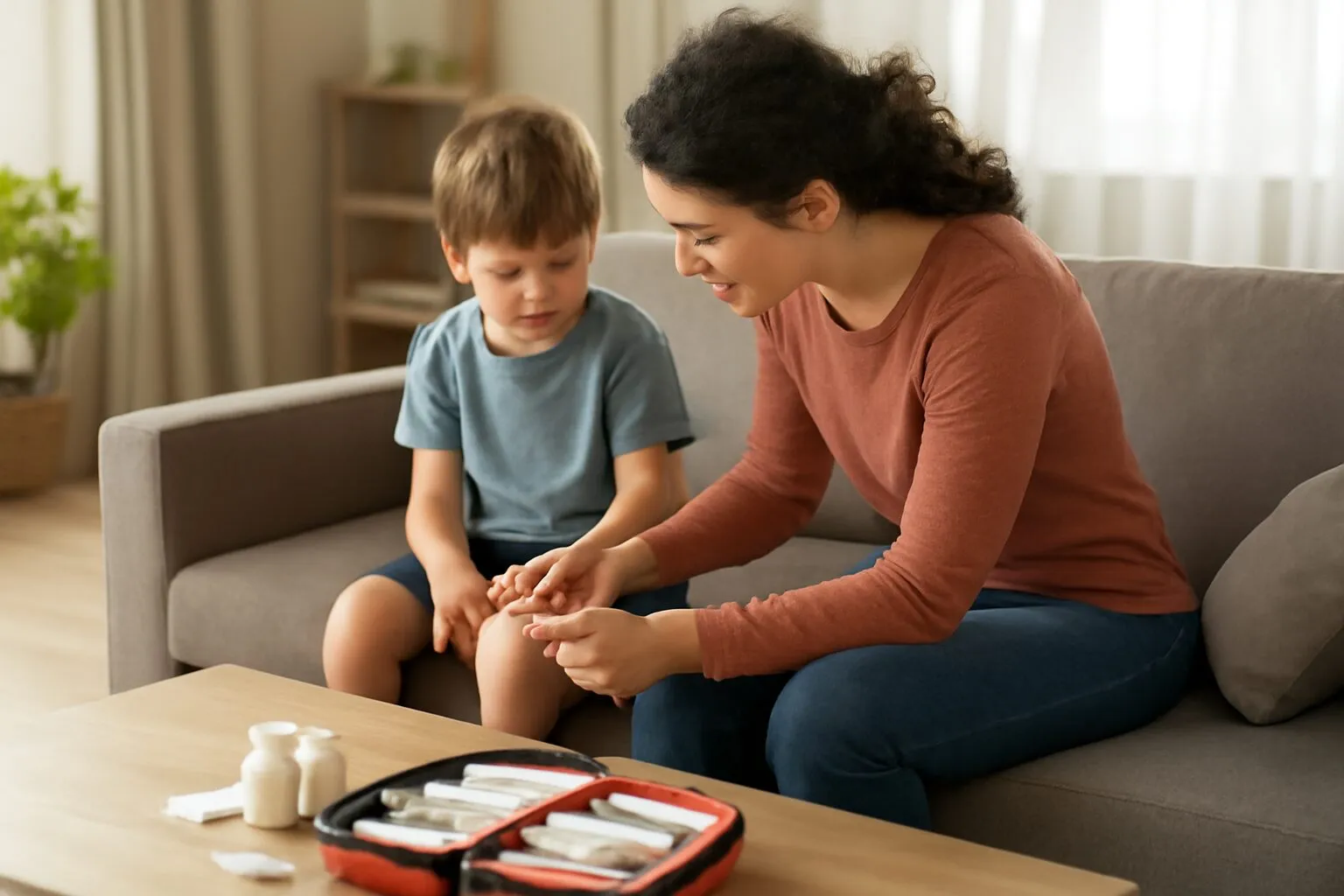
Keep a larger, more complete kit at home and a pared-down kit in each vehicle or in your bag. A home kit can include extra dressings, reference material and a wider range of sizes; a travel kit should be compact and contain the items you are most likely to use away from home. Having both reduces delay when a child needs basic care and lets you respond while arranging further help.
Starter packing checklist for family first aid kits (use this as a baseline)
Adapt quantities and some items for newborns and toddlers: choose smaller sizes and age-appropriate products, and verify medicine labels and dosing with your pediatrician before use. Below are categories and specific items to include.
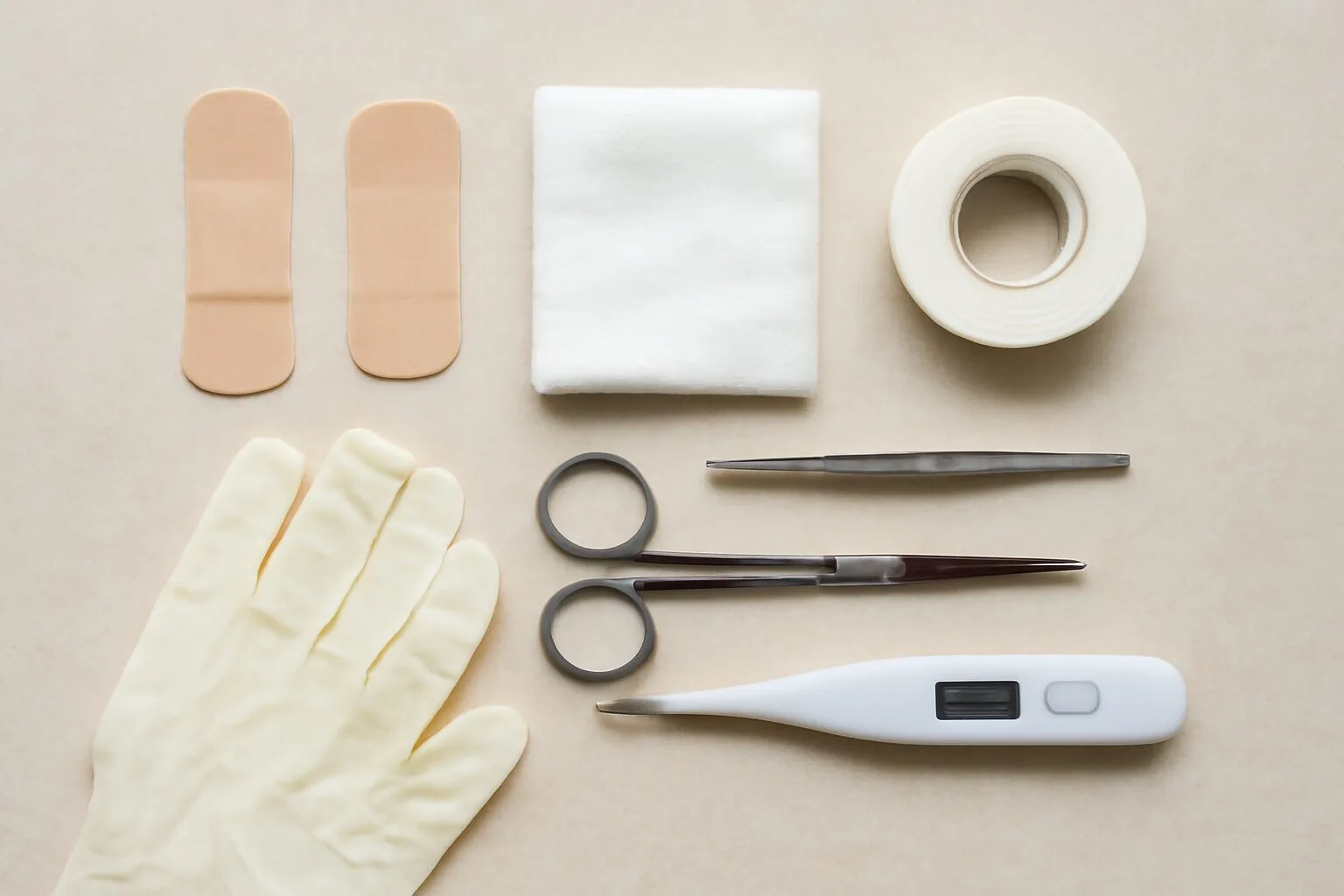
- Basic supplies: adhesive bandages in assorted sizes; sterile gauze pads; adhesive tape; antiseptic wipes; non-latex disposable gloves; scissors; tweezers; a digital thermometer; a small flashlight.
- Wound care: sterile saline for irrigation; extra sterile dressings; elastic (ACE) bandage for sprains; antibiotic ointment if you use it per local guidance.
- Pain and fever: age-appropriate analgesic/antipyretic formulations for children (keep original packaging and check age limits). Confirm suitability for infants and toddlers before administering.
- Allergy and severe reaction: prescribed epinephrine autoinjector if anyone has one—keep it accessible and ensure caregivers know how to use it; do not substitute other products for a prescribed autoinjector.
- Respiratory/choking preparedness: for infants and toddlers, carry recommended choking-response items and instructions for their age—the device size and technique differ by age and require training.
- Documentation: brief family medical information sheet listing allergies, current medications with dosages, emergency contacts and your pediatrician’s phone number.
For travel kits, pare the list down to compact wound care (assorted adhesive bandages, a few sterile dressings, antiseptic wipes), a thermometer, a child-appropriate analgesic/antipyretic confirmed for the child’s age, saline for irrigation, and a copy of medical information. Replace used items promptly and check that any medication is still within labeled use guidance before giving it.
Store kits safely and inspect them regularly
Keep kits where adults can reach them quickly but children cannot: a locked box or cabinet is commonly used for home kits. In vehicles, secure kits so they are protected from direct heat or cold as much as possible. Check contents at least once a year and after any use to replace expired or depleted items—this keeps supplies reliable when you need them.
What parents can reasonably do at home
Use first aid kits for immediate, short-term care: clean and dress minor wounds, control bleeding by applying firm pressure, treat minor burns with cool running water (not ice), and give age-appropriate antipyretics when the product is labeled for the child’s age. For infants and toddlers many products and dosages differ from those for older children—confirm suitability before using any medicine or medical device on very young children.
Training is essential. Take a verified first aid and CPR course that includes infant and child protocols so you understand how to perform procedures safely and when to stop home treatment and seek professional care.
When to seek medical advice or emergency care
Use first aid to stabilize a child, but contact medical services for serious or worsening conditions. Seek medical attention for:
- Uncontrolled bleeding that does not stop with direct pressure.
- Suspected broken bones or obvious deformity.
- Head injury accompanied by loss of consciousness, repeated vomiting, severe drowsiness, or worsening behavior.
- Difficulty breathing or persistent coughing or wheezing that doesn’t improve.
- Signs of severe allergic reaction (hives, swelling of face or throat, difficulty breathing)—use a prescribed epinephrine autoinjector immediately if available and call emergency services.
- Persistent high fever in infants, especially under 3 months, or any rapidly worsening condition.
If you are unsure about severity, contact your pediatrician, an urgent care clinic, or emergency services depending on symptoms and how quickly they are progressing.
Make a printable checklist and shop smart
To create a printable checklist, copy the starter packing list above and add family-specific items such as prescription names and doses, autoinjector brand and expiration dates, and sizes for any pediatric devices. When buying supplies, prioritize clear labeling for age and dosing, visible expiration dates, and compactness for travel kits. Do not assume a store-bought prepacked kit is complete—verify that included medicines and tools are appropriate for your child’s age and health needs before purchase.
Summary
Preparedness means keeping both a well-stocked home kit and a compact travel or vehicle kit, storing them safely, inspecting them at least yearly and after use, using products and dosages appropriate for each child’s age, and taking formal first aid/CPR training. Know the signs that require medical attention and keep emergency contacts and medical information readily available.