Baby carrier guide: choose the right type and check newborn fit
Practical guide to carrier types, newborn support rules, a step‑by‑step newborn fit and safety checklist, and buying and care advice to help parents match a carrier to baby size and routine.

Introduction
Decide what you need from a carrier before you shop: how old and heavy your baby is, where you’ll use the carrier most, and who else will wear it. This guide describes the main carrier types, what to check for newborns and older babies, a step‑by‑step newborn fit and safety checklist you can follow in store or at home, and practical buying and care advice. Always confirm a model’s weight limits and newborn guidance with the manufacturer before you buy.
Quick way to think about carriers
Match the carrier to two things: your baby’s size and your routine. If you need close, quiet contact at home, lightweight wraps and slings work well. If you plan long walks, errands or hikes, prioritize structured carriers with a supportive waist belt. If multiple caregivers will wear the baby, look for easy adjustability and repeatable strap settings. Finally, check explicit weight ranges and newborn‑support options on the product page.
Carrier types and when to choose each
Choose a design based on where and how long you’ll carry the baby rather than on style alone.
Soft wraps — best for close, quiet contact
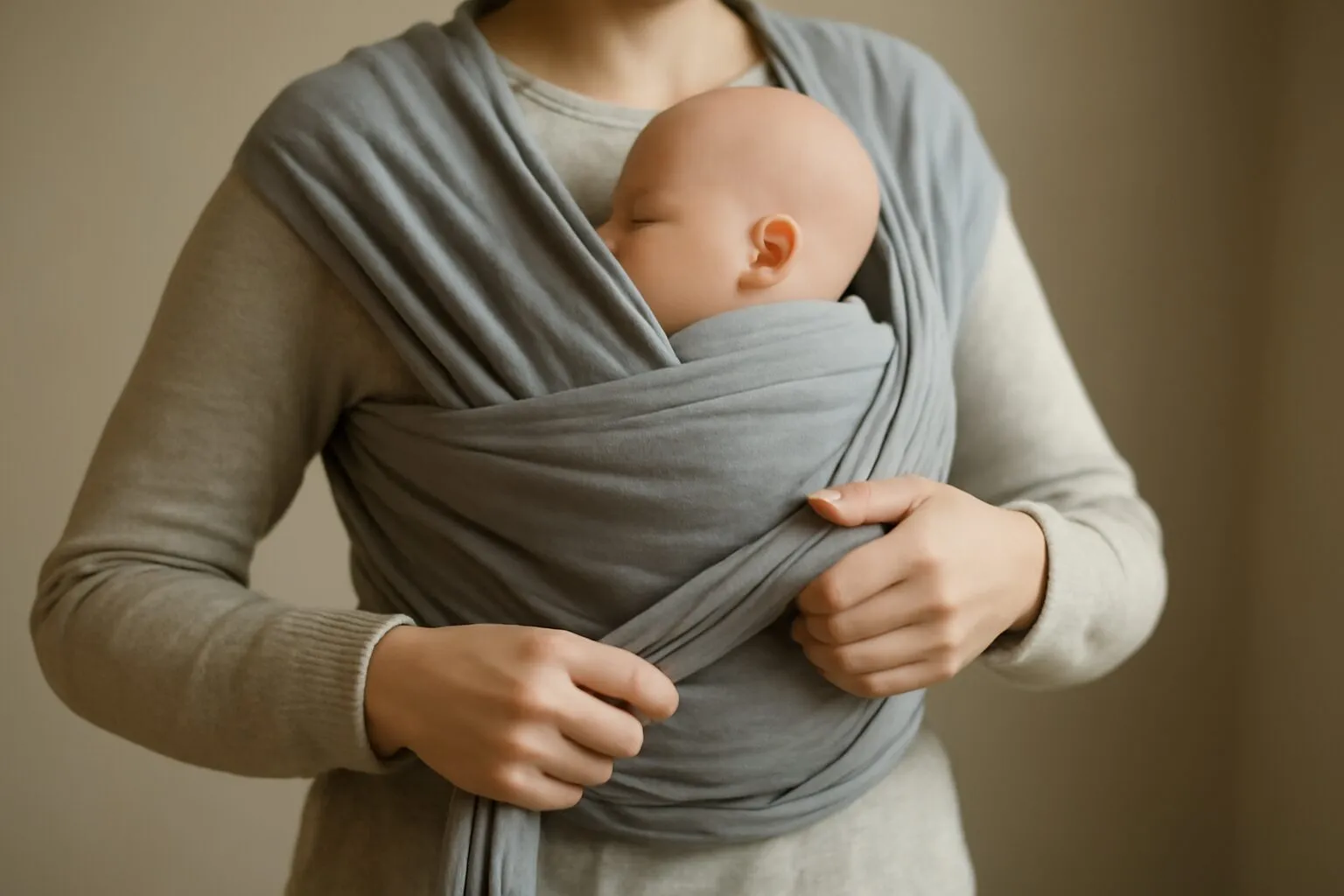
Long lengths of woven or stretchy fabric you tie around your body. They give very close contact and a flexible seat that adapts to newborns. They take practice to tie correctly and are most comfortable for shorter periods at home or for soothing and nursing rather than heavy outdoor use.
Ring slings — best for short hops and nursing on the go
A single shoulder of fabric threaded through rings to create an adjustable pouch. Compact and quick for short carries or breastfeeding while standing, but they load one shoulder unevenly and can become tiring for long, frequent wear.
Structured (soft‑structured) carriers — best for longer carries and outings
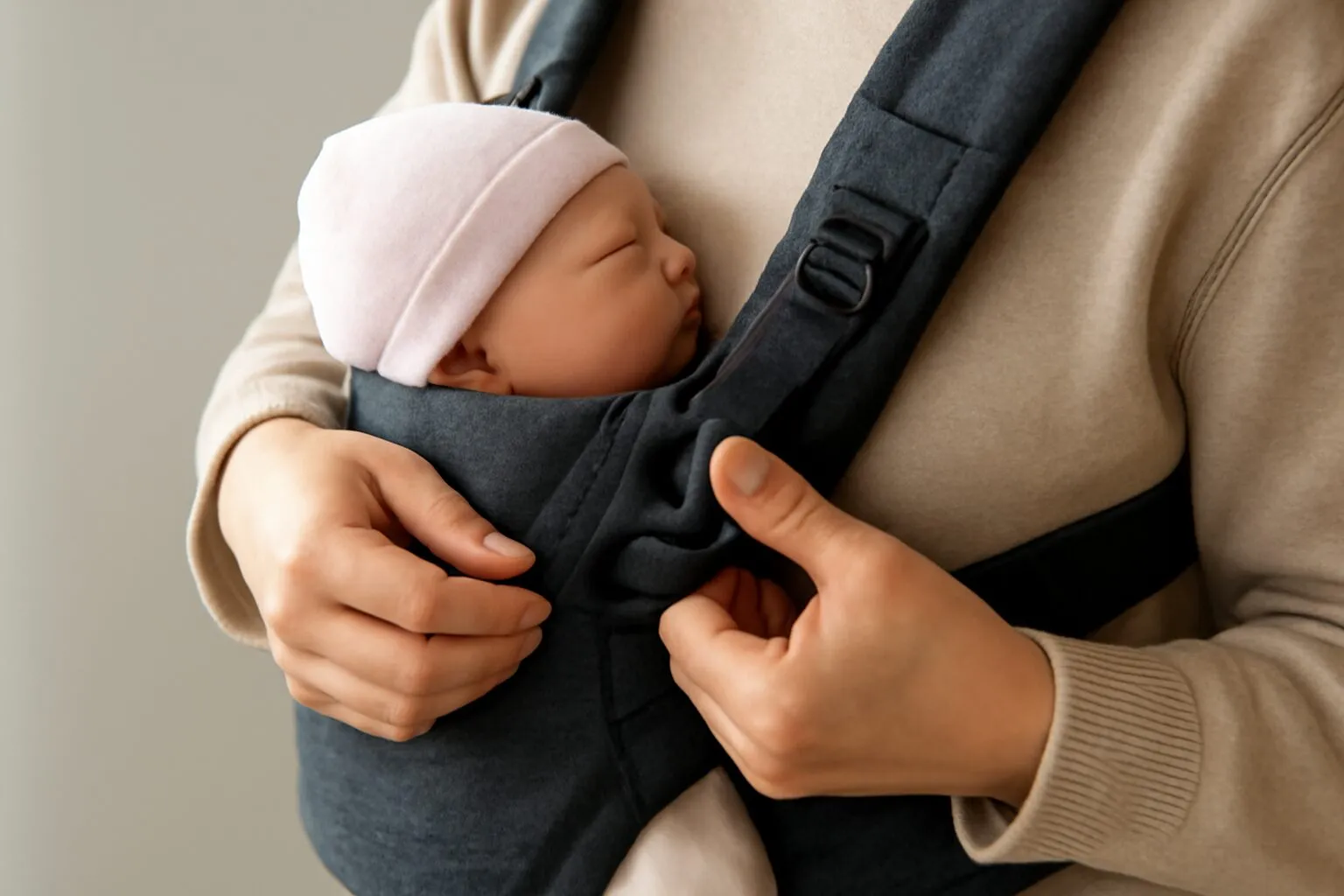
Carriers with buckles, padded shoulder straps and a supportive waist belt. They’re usually simple to put on alone, adjustable across wearer sizes, and offer multiple carry positions (front, hip, back). Many structured models either include or offer an infant insert for newborns.
Mei tais and hybrids — a middle ground
Panel carriers with long straps you tie or buckle. They combine the compactness of wraps with more support than a sling, and suit caregivers who want a simpler knot system or less hardware than a full structured carrier.
Age, weight and newborn‑insert rules: check this before you buy
Decide whether you need newborn‑specific support. Before purchasing, read the carrier’s stated weight range, whether it requires a separate newborn insert, and whether the manufacturer recommends any minimum age or weight. For hip and spinal comfort, the seat should support a deep, knees‑higher‑than‑bottom position often described as an ‘M’ shape rather than one that pinches the legs. If you’re unsure about an insert, confirm instructions for use and how they change the carrier’s weight limits.
Newborn fit and safety: step‑by‑step checklist
When you try a carrier with a newborn (or a weighted doll if in store), follow these steps in order to confirm a safe, comfortable fit.
- Prepare the carrier: Open straps and loosen so you can position the baby without fighting fabric. Check buckles and rings for damage.
- Place the baby: With the carrier on, lift the baby into position so their tummy is against your chest or front panel. Support the head with your hand until the carrier is secured.
- Secure and tighten: Fasten waist and shoulder straps, then tighten gradually. The baby should sit high enough that you can kiss the top of their head without bending your neck.
- Confirm airway: Ensure the baby’s face is visible, not pressed against fabric or your body, and that nothing covers the nose and mouth. The chin should not be forced down onto the chest.
- Check head and neck support: Newborns need firm support; the carrier should hold the head close to the wearer’s chest without slumping.
- Verify hip position: The thighs should be supported and the knees at or above hip level in the deep seat described earlier to protect hip development.
- Test mobility and comfort: Bend, reach and walk a few steps. Adjust straps if you feel pinching, pressure points or the baby shifting too low.
- Final check: Re‑confirm that the baby’s face is unobstructed and that the carrier feels secure. Keep a hand near the baby’s head when moving quickly or going up and down stairs.
Fit and practical checks for any buyer
When trying a carrier on, use these quick checks to decide whether it will work for you and other caregivers.
- Can you get it on alone? Fasteners and clear adjustment marks make solo use easier.
- Is it comfortable for the wearer? Wide, padded shoulder straps and a supportive waist belt reduce back and shoulder strain during longer carries.
- Adjustability between wearers: Test how quickly the carrier re‑sizes for a different torso; frequent switching requires faster adjustments.
- Care and washability: Machine‑washable fabrics and removable pads are more convenient if you expect frequent washing; check instructions for fasteners and any special care.
Choose by use case: what to pick for your routine
Decide what you’ll do most, then prioritize these features.
- Hiking and long walks: Structured carrier with a padded, stabilizing waistband, breathable fabric and good lumbar support.
- Daily errands and mixed use: A versatile structured carrier that offers multiple carry positions and an optional infant insert.
- Nursing and soothing at home: Soft wraps or slings that allow close contact and easy adjustment at the breast.
- Two or more caregivers: Models with quick, repeatable adjustments, or carriers with markings and buckles that make switching fast and consistent.
Care, cleaning and buying practicalities
Decide how much maintenance you’ll accept and what your budget allows. Machine‑washable carriers are simplest; always follow the manufacturer’s cleaning instructions, and remove or secure small parts before washing. Check warranty and return policies so you can exchange a carrier that doesn’t fit. You don’t have to buy the most expensive model: many brands offer entry‑level and mid‑range versions with the same safety basics. Verify weight limits and insert requirements for any used carrier before reusing it.
Conclusion
Match carrier type and newborn support to your baby’s size and your lifestyle, then try carriers on to check ease of use, adjustability and wearer comfort. Confirm cleaning options, warranty and return policies before buying. For specific medical or developmental concerns, consult a pediatrician or a certified babywearing educator and always follow the manufacturer’s guidance.
Frequently asked questions
Do all carriers support newborns?
No. Some are made for the newborn stage and others for older babies or toddlers. Always check a model’s stated weight limits and whether it requires a newborn insert.
How do I know if a carrier is comfortable for me?
Look for wide, padded shoulder straps and a supportive waist belt; try carrying weight in the store or with a weighted doll to assess pressure points and mobility.
What should I clean first if the carrier is stained?
Follow the manufacturer’s cleaning instructions. Machine‑washable fabrics are generally easier; check fasteners and any removable padding before washing.