Diaper rash treatment: step-by-step home care for irritated skin
Practical home steps to soothe diaper-area irritation: change diapers often, clean gently with water or alcohol-free wipes, apply a zinc oxide or petrolatum paste at each change, and give brief diaper-free time while watching for signs needing medical care.
Introduction
Decide whether to treat the rash at home or call your pediatrician: this guide shows what you can do right away to soothe irritated skin, cut the causes of rash, and when to seek medical care. Follow the practical steps below to reduce moisture and friction, protect the skin while it heals, and prevent future episodes.
What diaper rash is and how to recognize common types
Diaper rash is a general label for irritation in the diaper area. It most often comes from prolonged contact with urine or stool, friction from a wet or soiled diaper, or sensitivity to cleansing products. You may see diffuse red patches where the diaper rests, small raised bumps, or raw, broken skin in more severe cases. Some rashes are simple irritant rashes that respond to home care; others may be complicated by a yeast (fungal) infection or need medical evaluation. If you are deciding whether to treat at home, uncomplicated irritant rashes usually improve with the measures below; rashes that worsen, spread, or have signs of infection need a clinician’s assessment.
Step-by-step home treatment you can try now
Use these straightforward steps each time you change the diaper, with a daily routine worksheet. They limit skin exposure to irritants and create a protective environment for healing.
- Change diapers frequently. Remove wet or soiled diapers promptly to reduce moisture and contact with digestive enzymes in stool that irritate skin.
- Clean gently at each change. Use plain water with a soft cloth or a fragrance- and alcohol-free wipe. For very irritated or broken skin, rinsing with water from a squirt or spray bottle reduces rubbing. Pat the area dry—don’t rub.
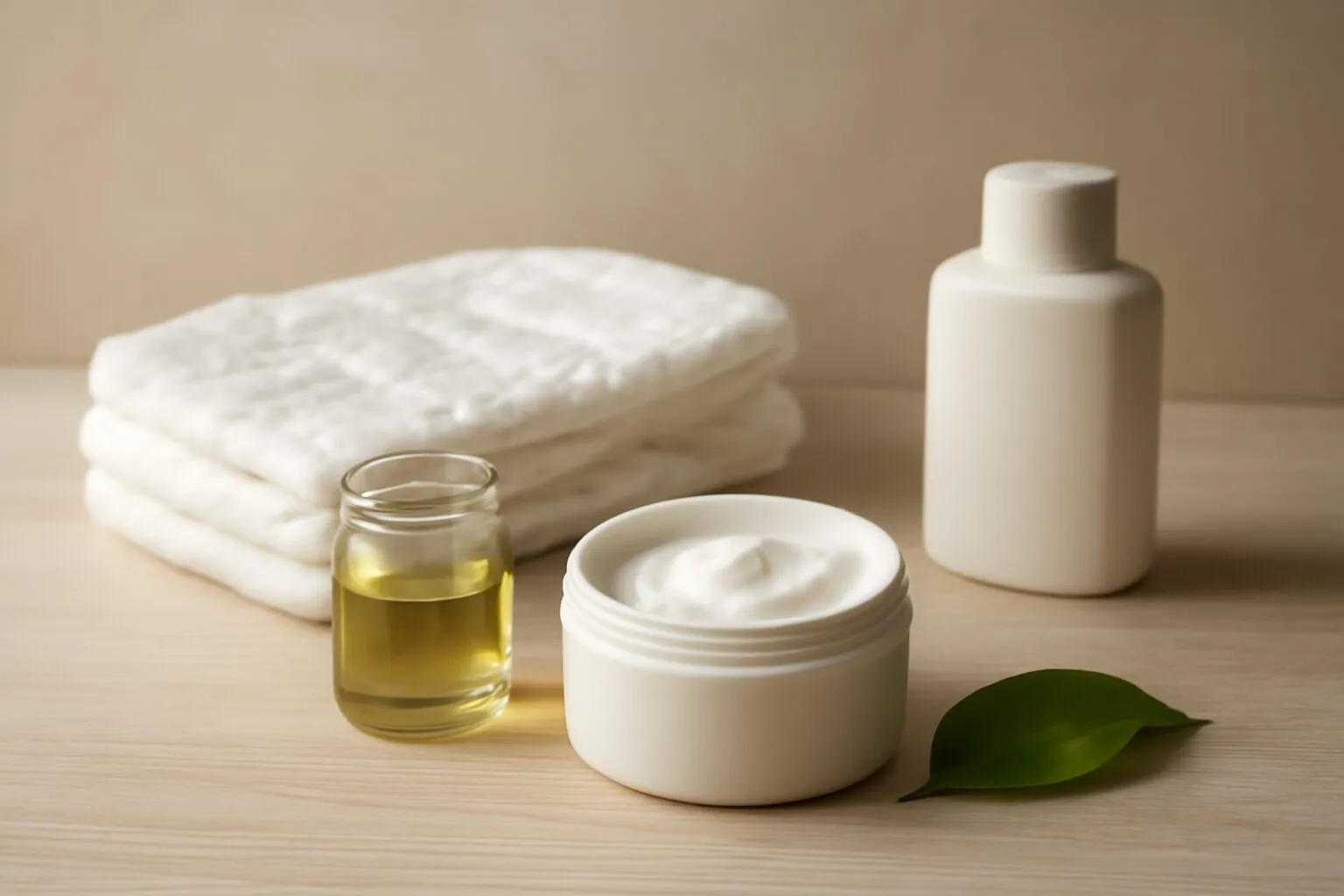
- Apply a thick barrier paste every change. Use a zinc oxide or petrolatum-based diaper paste and spread a visible protective layer on the skin to block moisture and friction. Brand names are less important than a clear coating that stays on until the next change.
- Give diaper-free time. When practical, let the baby go without a diaper for brief periods so air can reach the skin and speed drying and healing.
If the rash improves with these measures, continue them and keep watching the skin. These steps represent first-line home care commonly recommended by pediatric providers.
Safe home remedies, products to prefer, and what to avoid
Choose gentle options and avoid anything that can sting or dry delicate skin. Cleansers should be free of alcohol and added fragrance. For a protective barrier, use a fragrance-free zinc oxide or petrolatum-based paste. Avoid routine use of over-the-counter antibiotic ointments for ordinary diaper rash—check with your pediatrician before applying them. If you are uncertain about a particular product, contact your child’s clinician before use.
Prevention: steps to reduce future diaper rashes
Preventing rashes focuses on limiting skin contact with urine and stool and reducing friction. Practically, that means changing diapers frequently, cleaning gently at each change, and routinely applying a barrier paste. Choosing alcohol- and fragrance-free wipes and allowing occasional diaper-free time are also helpful. Parents may consider diaper fit, type and absorbency, but specific product comparisons (for example, cloth versus disposable) are not settled here; focus on keeping the skin dry, clean and protected.

When to call your pediatrician or seek medical care
Contact your pediatrician if any of the following apply:
- The rash is severe or spreading beyond the diaper area.
- There are signs of infection, such as increasing swelling, pus, or spreading redness.
- The child has a fever or appears unwell in addition to the rash.
- The rash does not improve with home care or you notice painful open sores.
Your pediatrician can determine if the rash needs prescription treatment, such as a topical antifungal, or other therapies.
Common questions caregivers ask
Can most diaper rashes be treated at home?
Yes. Many cases respond to frequent diaper changes, gentle cleansing, and a protective diaper paste. If the rash fails to improve or shows worrying signs, contact your pediatrician.
Which cleansers and barrier products are safe?
Use alcohol- and fragrance-free cleansers. For barriers, pediatric guidance commonly recommends fragrance-free zinc oxide or petrolatum-based pastes applied as a visible layer at each change.
Conclusion
Start diaper rash treatment by limiting contact between the skin and urine or stool: change diapers often, clean gently, apply a barrier paste at every change, and give the skin brief diaper-free time, with a bedtime routine chart. These practical steps soothe most uncomplicated rashes. If the rash worsens, spreads, shows signs of infection, or does not improve with home care, seek medical evaluation and follow your pediatrician’s advice for specific treatments.