Stroller wagon for two children: choose the right model by use case
A practical buyer’s guide for parents choosing a stroller wagon that carries two children. Covers which specs to compare, hands‑on safety and fit checks, and matching wagons to city, beach, travel or rough‑terrain use.
Decide first how and where you’ll use a two‑child stroller wagon: daily errands, sandy beaches, travel, or rougher trails. That choice narrows the features that matter—wheels, folded size, weight capacity and harnessing—and makes the rest a matter of preference. This guide shows you which numbers and checks to compare side‑by‑side, what hands‑on safety and fit tests to run before buying, and how to match a wagon to your dominant outings.
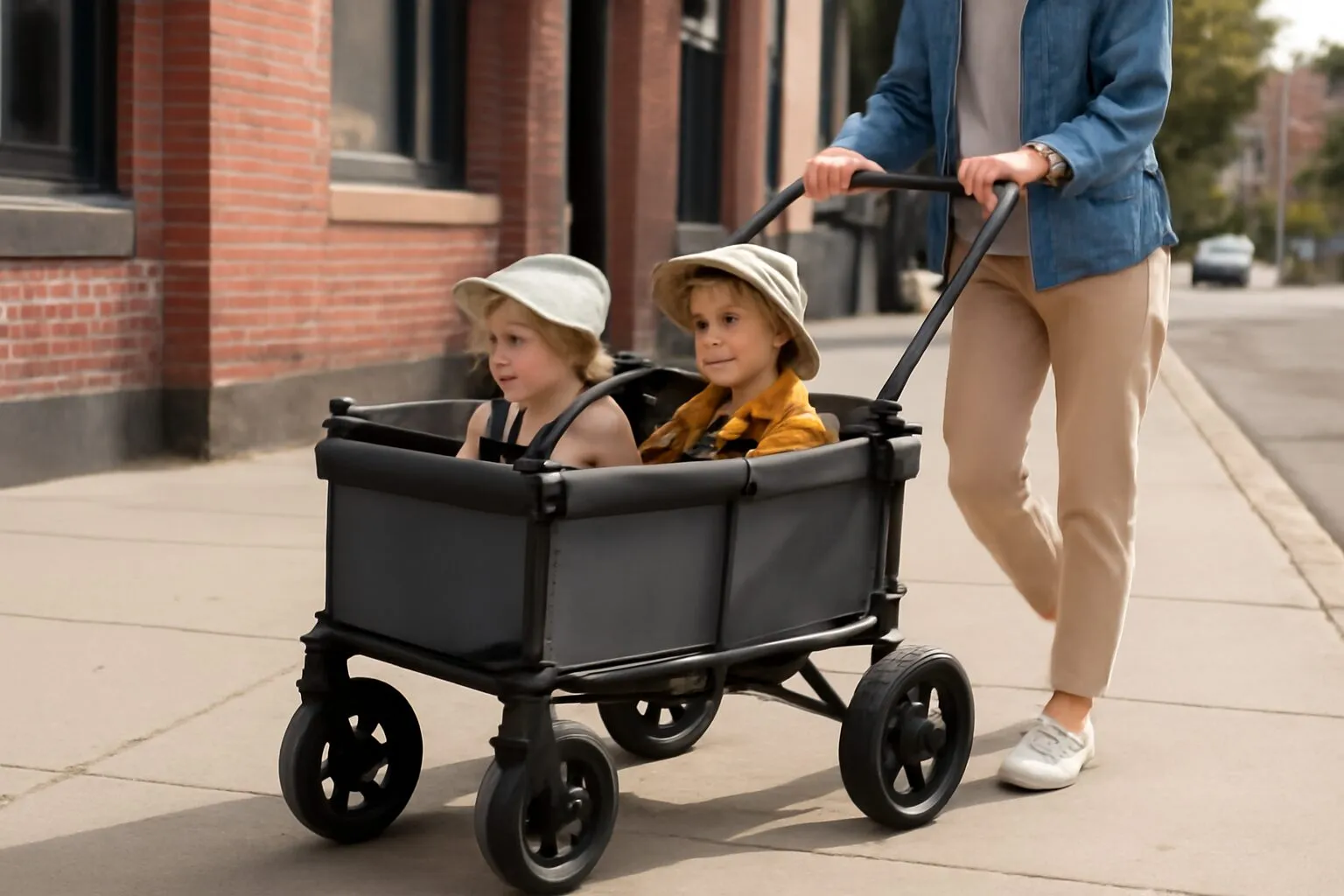
Compare side‑by‑side: the specs to use when choosing
What you should decide at the start: which features you’ll actually use on most outings (for example, compact fold for city life, or big low‑pressure tires for beach days). Once that’s clear, read each model’s spec sheet for the handful of measurements that determine day‑to‑day suitability: seating and harness type, per‑seat and total weight limits, folded footprint and wagon weight, and wheel type and brakes. The short list below is what to scan first.
What to read on the spec sheet
- Seating and harness: confirm whether seats are individual with 5‑point harnesses or a shared bench with lap belts.
- Per‑seat and total weight limits: add the two children’s current weights plus likely cargo to the manufacturer’s per‑seat and total load limits.
- Folded footprint and wagon weight: check folded dimensions against your trunk opening and measure lift weight if you’ll load it alone.
- Wheels and tires: small hard wheels are fine for sidewalks; larger pneumatic or air‑like tires handle sand, grass and gravel better.
- Minimum age/recline options: if you need newborn compatibility, confirm bassinet or car‑seat adapters and whether the seats recline enough for young infants.
Safety, size and fit checks you must do before buying
Decide to test the wagon as if it were already yours. A few hands‑on checks in store or with a demo model quickly reveal unsafe or inconvenient designs. Use the ordered checklist below so you don’t miss a critical fit or performance issue.
Step‑by‑step checks
- Age and weight verification: read the manufacturer’s stated minimum age and maximum weight per seat and total. Calculate your real load: (child A + child B + typical cargo).
- Harness type and fit: confirm harnesses are 5‑point or manufacturer‑approved equivalent, and that straps tighten properly across each child without gapping. For bench seats, ensure the buckle sits at waist level and the belt can be tightened for smaller kids.
- Brake test: try the parking brake on a modest slope (or ask staff to show it). The brake should hold the wagon still and be easy to engage and release even while loaded.
- Stability and center of gravity: load one side with weight (a bag of park gear) and push gently to feel for tipping or uneven tracking; wagons with deep sidewalls and a low floor reduce tip risk.
- Canopy, ventilation and sidewall height: check whether shade covers both seats and whether mesh panels provide airflow on hot days. Higher sidewalls help contain standing toddlers.
- Entry/exit test: practice getting two children in and out. If they need to climb in, confirm the step or side‑entry is at a safe height for them to manage.
When to ask for more documentation
If anything about harness attachments, frame welds, or brake design looks unfamiliar, ask the seller for the user manual or a demonstration. For used wagons, insist on seeing the original manual and any warranty transfer rules when possible.
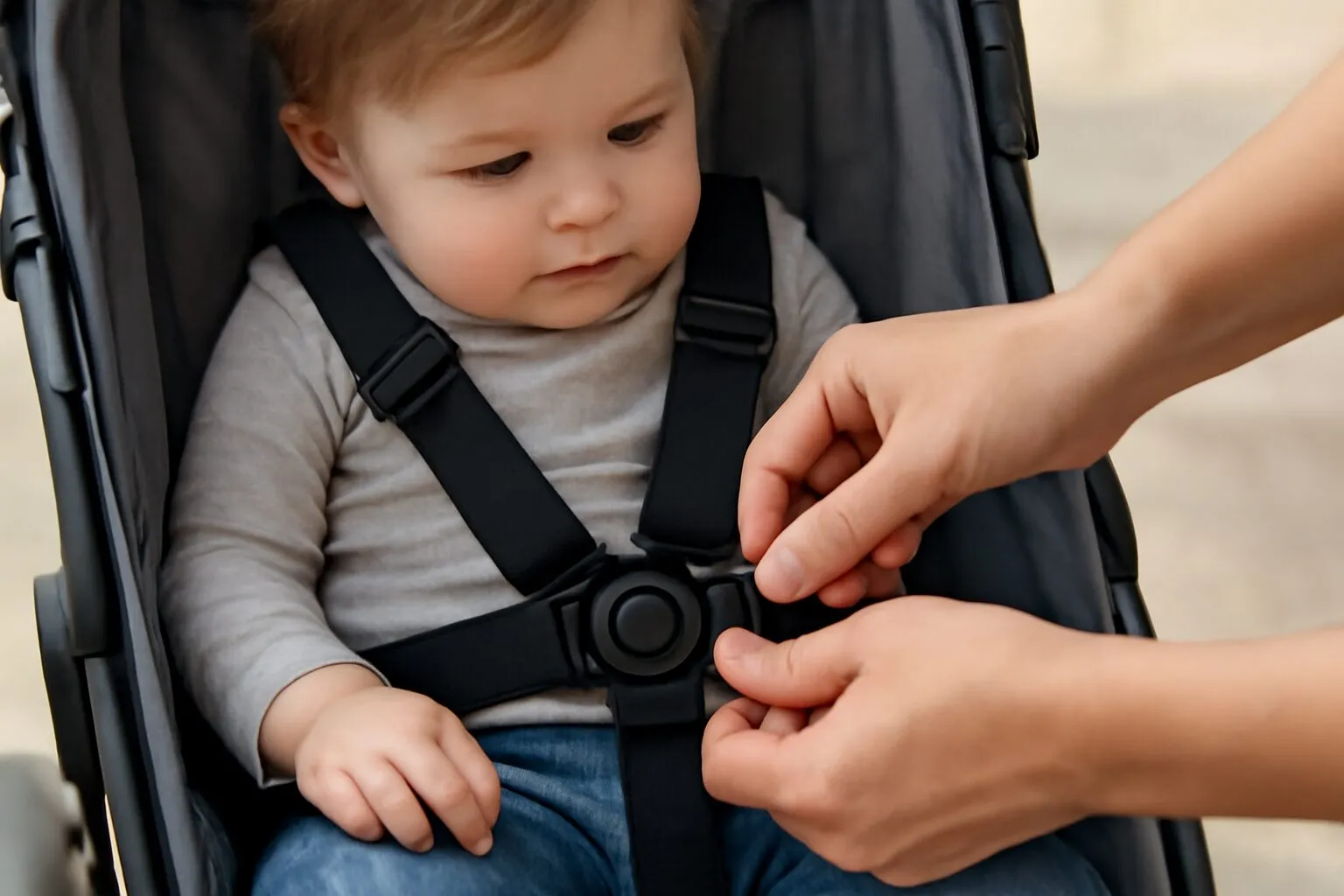
Choose by use case: match a wagon to your outings
Decide which environment will dominate your outings; every practical tradeoff comes down to wheels, folded size, weight and cargo capacity. Below are the typical priorities for common use cases.
City errands and sidewalks
Choose a wagon with a narrower footprint and smaller swivel front wheels for tight aisles and curbside turns. Prioritize a light frame and a compact fold so you can lift it into trunks and up stoops frequently. Look for an easy one‑hand folding mechanism and a stable parking brake for quick stops during errands.
Beach, parks and soft sand
Pick large, low‑pressure or air‑like tires (often labeled beach or all‑terrain) to prevent bogging in sand or grass. Expect a heavier frame and a larger folded footprint—verify your car and storage space can handle it. Water‑resistant fabrics and interiors that hose off make cleanup much easier after sandy, muddy outings.
Travel and airports
If you fly or pack trunks tightly, prioritize a compact, standing fold or a model whose parts are removable for a smaller package. Lighter wagons reduce the chance you’ll need help lifting. Check airline policies—some accept wagons as gate‑check items but rules vary—so confirm before travel.
Active terrain and sports fields
For gravel, trails or uneven pitches, choose all‑terrain tires and a sturdier frame to improve durability and handling. Consider a handle that locks in multiple positions so you can push or pull with better control on slopes and rough ground.
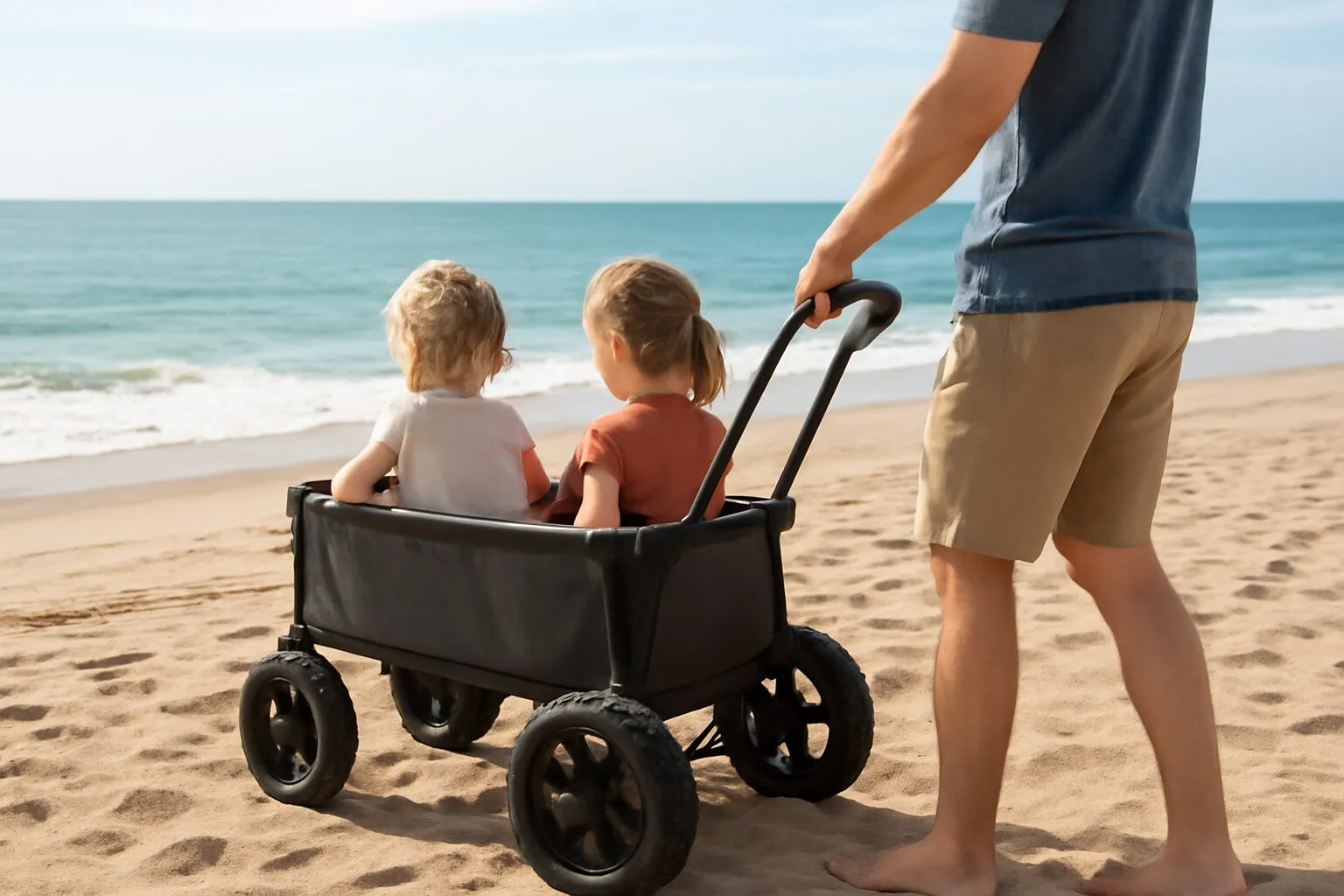
Folding, storage and car‑fit: practical steps to reduce daily friction
Decide how often you’ll realistically bring the wagon. Folding style, compactness when folded and wagon weight determine whether it becomes a constant presence or an occasional tool.
Quick car‑fit test (do this at home)
- Measure trunk depth from the rear bumper edge to the back of the rear seats; write it down.
- Measure trunk opening width and height—narrow openings can block even a small folded wagon.
- Compare those numbers to the model’s folded dimensions; allow a 2–3 inch margin for awkward angles and any wheels or handles that don’t fully collapse.
Practical folding tips
One‑hand, standing folds are easiest when you’re managing two kids. If a model requires wheel removal to fit in your trunk, practice at home—repeated removals add wear and are a real friction point. For longer trips, some families use a vehicle roofbag or soft case to keep the wagon cleaner in shared cargo areas and protect it from dirt or salt.
Recommended approach and next steps
Decide your primary use (city, beach, travel or mixed) first. Then run the hands‑on checks above at a store or with a demo: test harness fit with your children, perform a brake test with weight, and measure the folded footprint against your car. If you can’t test with your children, bring two similarly sized stuffed items and a bag of groceries to simulate the load.
Prioritize the constraints that affect you most: when trunk space is tight, choose the most compact folded footprint that still meets weight limits; when you spend time on sand and grass, accept the extra pounds for all‑terrain wheels. Small practical choices—a one‑hand fold, a hose‑off interior, or a removable canopy—add up to fewer headaches on real outings.
Frequently asked questions
Can two toddlers share a wagon seat?
Yes, if the model’s per‑seat and total weight limits are respected and harnesses secure each child independently. Shared benches are acceptable when the manufacturer labels them for two passengers and provides adequate restraints.
Are stroller wagons allowed in theme parks and on trails?
Policies vary by venue. Always check the park or trail rules in advance—some parks and venues prohibit wagons of any kind.
With a focused spec check and a short real‑world test (harness, brake, folded fit), you’ll be able to choose a two‑child stroller wagon that fits your car, your kids and the places you plan to go.