
Daily routine worksheet for parents: printable and editable templates
Practical parent guide showing which tasks to include, formats for different ages, editable PDFs and printable options, plus quick setup and reinforcement steps to help routines stick and reduce daily stress.
Use a single, clear worksheet to reduce morning chaos, speed after-school transitions and make bedtime calmer. This guide helps you decide what to include on a daily routine worksheet, choose the right format for your child, customize a printable quickly, and apply simple behaviour strategies so the chart actually gets used.
What to include and how to arrange it
Decide what you need the worksheet to do: give a predictable order, keep each step simple and put the chart where the child will see it. A useful sheet combines those three goals so the child can follow the routine without extra explanation.
- Core sections — group tasks by time of day: Morning, School/Daytime, After-school and Bedtime. Limit each section to about 4–8 steps so the sequence stays manageable.
- Task format — use one- or two-word labels (“Brush teeth”, “Get dressed”) and add an icon for pre-readers. Let children mark progress with checkboxes, Velcro cards or dry-erase cells.
- Customization fields — include a place for the child’s name, optional times, and a small rewards column or sticker area for immediate reinforcement.
- Accessibility — use high-contrast text, large icons and offer both colour and monochrome versions for sensory or visual needs.
Choose the right format for your child
Pick a layout that matches reading level, attention span and need for structure. Below are concrete suggestions you can follow.
Toddlers and pre-readers (about 2–4 years)
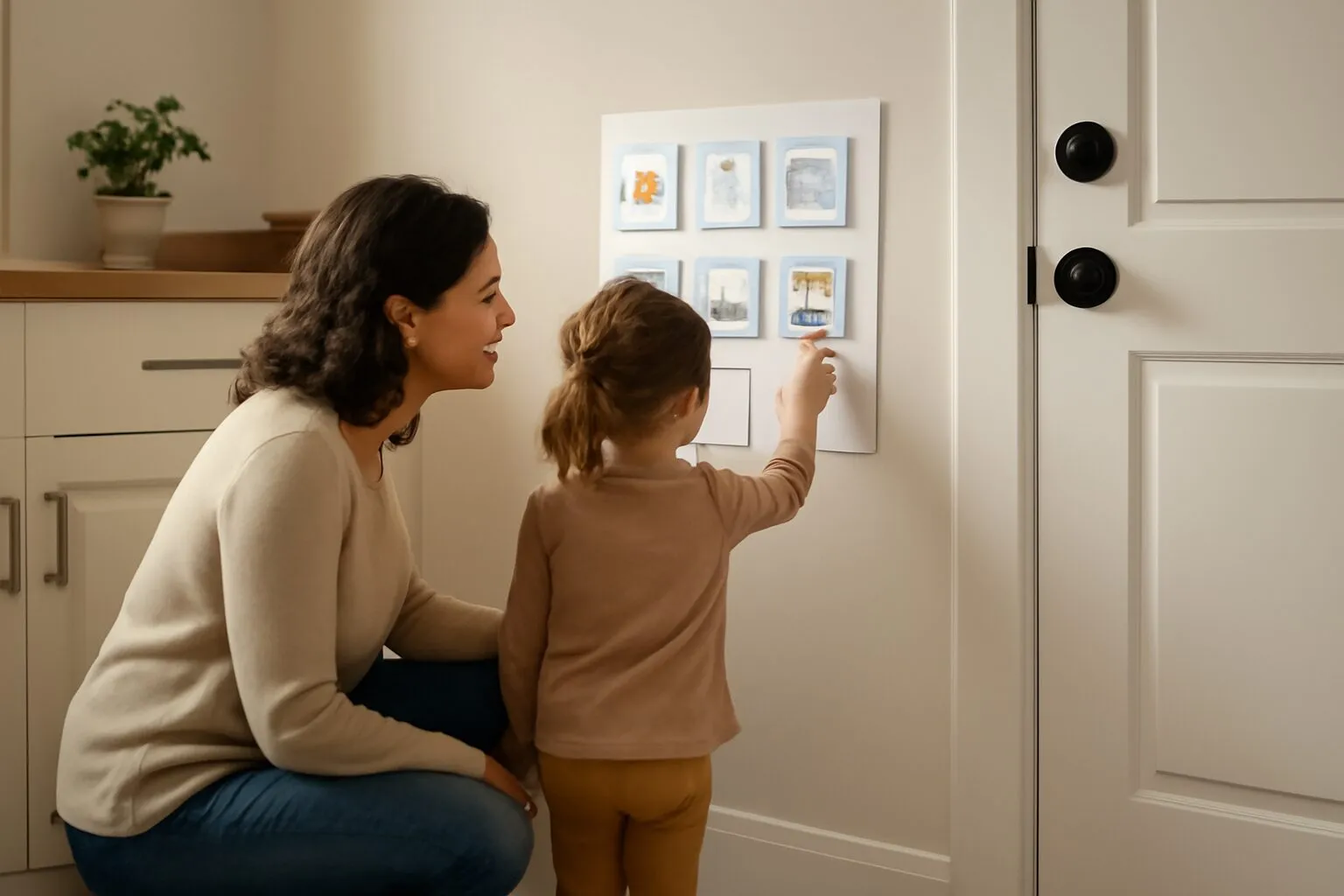
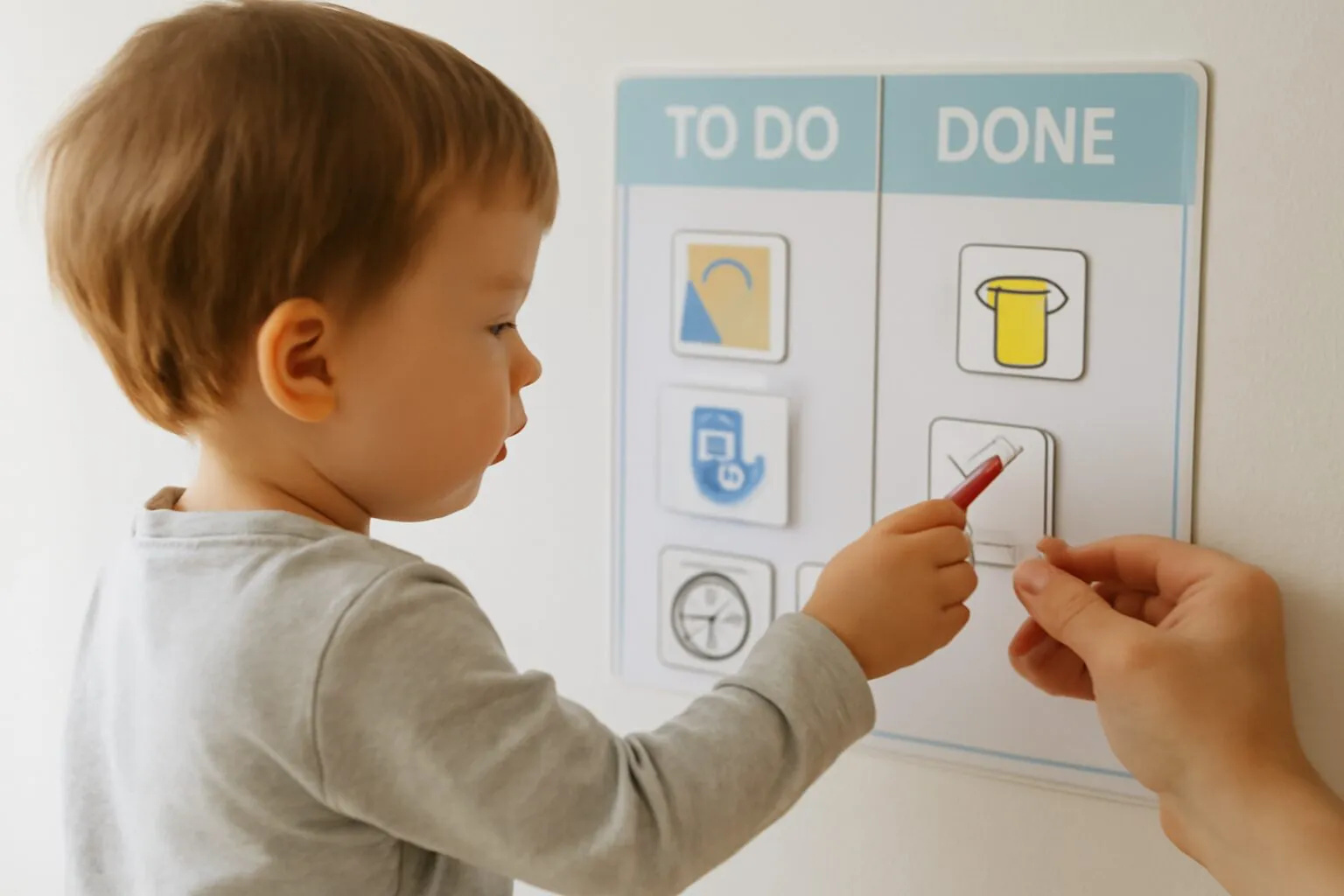
Use large icons, one-word labels and keep each routine to 3–6 steps (for example: Wake up, Potty, Teeth, Dress, Breakfast). Movable picture cards (Velcro or magnetic) work well so the child can move a card from “To do” to “Done.”. Mount the sheet at child height and practice the sequence together for several mornings before expecting independent use.
Early readers (about 4–7 years)
Combine short labels with small icons and expand to 6–8 steps. Checkboxes or dry-erase lists let children tick off completed items and see progress visually.
School-age children (7+ years)
Older kids often prefer a plain checklist with times or a two-column layout (Task / Completed time). Editable PDFs or a shared digital checklist (Google Sheet or app) let them add school-specific items like homework, instruments or sports gear.
Children with ADHD, autism or sensory differences
Visual schedules that show concrete, predictable steps reduce anxiety and increase independence for many neurodivergent children. Keep steps concise and pair difficult transitions with a calming cue (a timer or a quiet-corner icon). Laminated sheets with Velcro cards add a tactile, manipulable element that can help sustain attention.
Where to find printables and editable versions
Search parenting and education sites for routine charts, morning and bedtime templates, and icon packs. If you plan to personalize text often, choose editable PDFs or Google Sheets; if your child needs a fully visual schedule, download printable icon sets to swap into any template.
Five-minute customization checklist
- Pick the layout: single-day grid, separate time-of-day sheets, or card-based “To do”/”Done” board.
- Edit labels: shorten task text to one or two words where possible.
- Add icons: replace words with pictures for pre-readers or visual learners.
- Decide format: print and laminate for dry-erase use, or save an editable PDF/Sheet for weekly tweaks.
- Choose placement: front of the bedroom door, on the fridge, or inside a homework folder—put it where the child naturally looks during the routine.
Simple implementation steps that work
Worksheets are tools; how you introduce and reinforce them determines their usefulness. The next steps tell you what to do and when.
1. Teach the routine for a few days
Walk through the chart together and model each action: say and show what to do, for example “”Now we brush teeth—watch how I do it”” Repeat the sequence until the child recognises a completed step and the sign for “done”. Celebrate small wins so the chart becomes familiar.
2. Use consistent cues and short timers
Pick a cue—a song, a lamp, or a five-minute timer—that signals routine time. Timers make abstract spans concrete and help children who struggle with transitions move from one step to the next.
3. Give immediate, specific praise
Comment on the exact behaviour you want to see: “I liked how you put your shoes by the door—great job getting ready!” Short, specific feedback encourages repetition more reliably than vague praise or distant rewards.
4. Change routines gradually
When you need to add or move steps, do one change at a time and allow several days to adjust. Large, rapid changes often create resistance.
5. Offer controlled choices
Let the child choose within limits—for example, “”Do you want to brush teeth before or after you get dressed?”” Controlled choices increase buy-in while keeping the overall routine intact.
6. Keep rewards immediate and simple
Use short-term reinforcers (stickers, a two-minute story after bedtime tasks, a small evening choice). If you use a longer reward system, maintain daily, immediate reinforcement so progress feels meaningful each day.

Troubleshooting
- Child ignores the chart: Re-teach the routine together, shorten the list and ensure the worksheet is visible and within reach.
- Resistance at transitions: Add a timer or a calming step (deep breaths, a quiet minute) before the difficult task and praise compliance.
- Worksheets become stale: Rotate icons, let your child decorate the sheet, or move older kids to a digital checklist they can control.
Sample routines to copy
Short morning routine for a pre-reader
- Wake up
- Potty
- Brush teeth
- Get dressed
- Breakfast
- Backpack on
Evening routine for an early reader
- Put away toys
- Jammies on
- Brush teeth
- Story/reading
- Lights out
Printing and file-format advice
For frequent use, laminate a sheet to write with dry-erase markers; for rotating tasks, printable cards with Velcro are durable and tactile. If you edit tasks often, keep an editable Google Sheet or a fillable PDF so you can update without reprinting each week.
Frequently asked questions
How long until a routine becomes a habit?
There isn’t a single timeline. Consistent short practices and immediate reinforcement usually produce visible improvement in days to a few weeks. Keep expectations modest and celebrate small gains.
Can one worksheet work for multiple children?
Yes—shared charts work for siblings with similar schedules. For different developmental stages, create separate sheets tailored to each child’s needs.
Next step
Pick one routine (morning or bedtime), choose a printable that matches your child’s reading level, and follow the teaching and reinforcement steps for one week. Small, consistent effort will reduce stress and build independence.